Fostering community, expressing identity, and cultivating pride at the home of the School of Design
Spring 2023
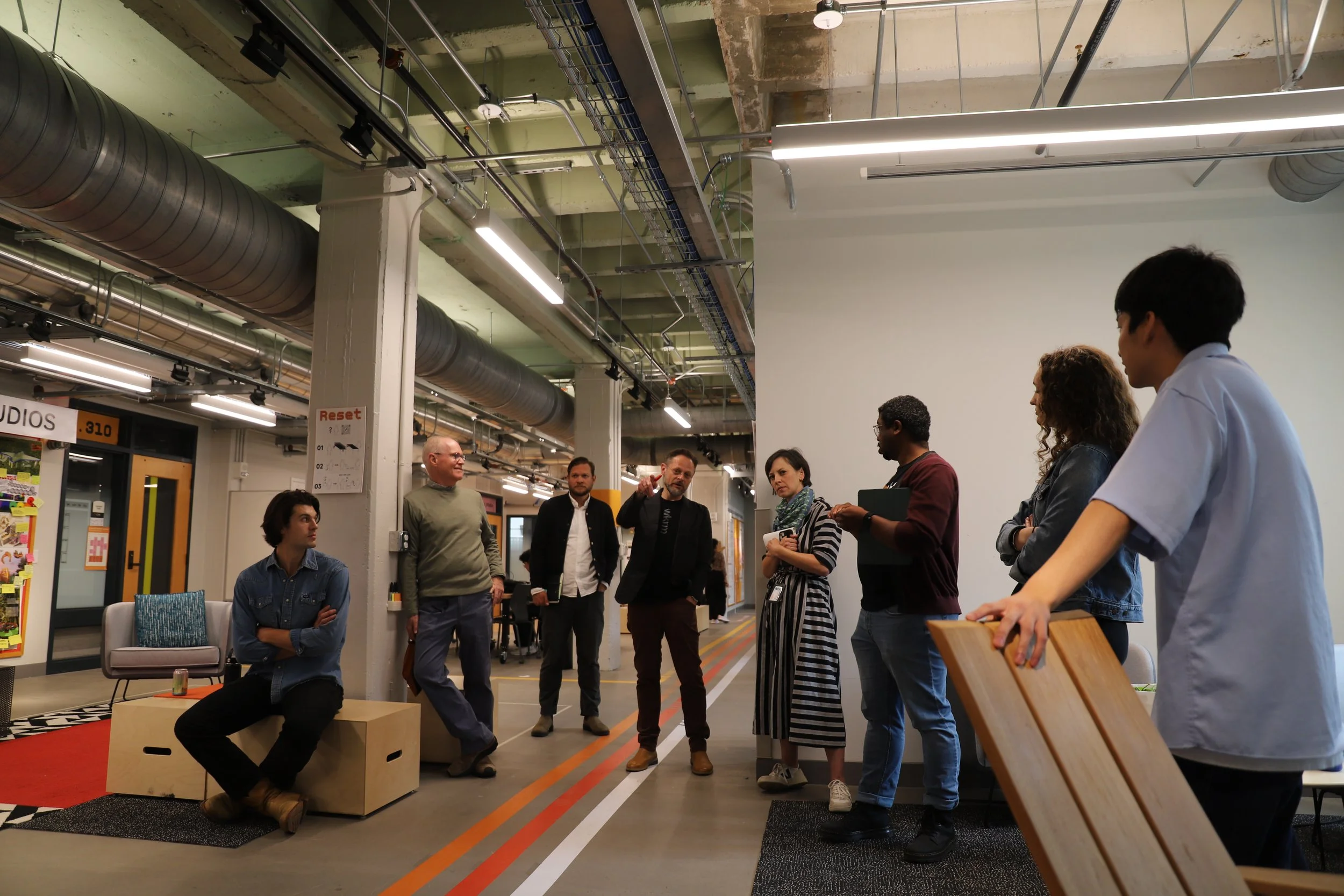
Our student team worked with key members of the Design Department’s “Space Camp” team to develop more intentional principles and practices for the use of space in the Design Department’s main building (Anna Hiss Gym) by students, faculty, and visitors.
Space Camp is a Design Department service group. Various staff and faculty have served, focusing on creating optimal use experiences in AHG by introducing furniture and supplies, improving access to resources and storage, and making the place navigable. Its charter is to advance ideas and continuously improve the design facilities.

What Makes a Place Great? A Framework for Insight, Inquiry, and Intervention.
Foundational research in Anna Hiss Gym (AHG) was conducted in Spring 2023 by the wkrm team. They used the framework above developed by The Project for Public Spaces to understand problems and opportunities and guide ideation and prototyping.
Uses and Activities
What do students, faculty, and staff do in AHG?
Why do they do things the way they do (and why don’t they?)
What evidence exists in the environment that suggests new activities?
Comfort and Image
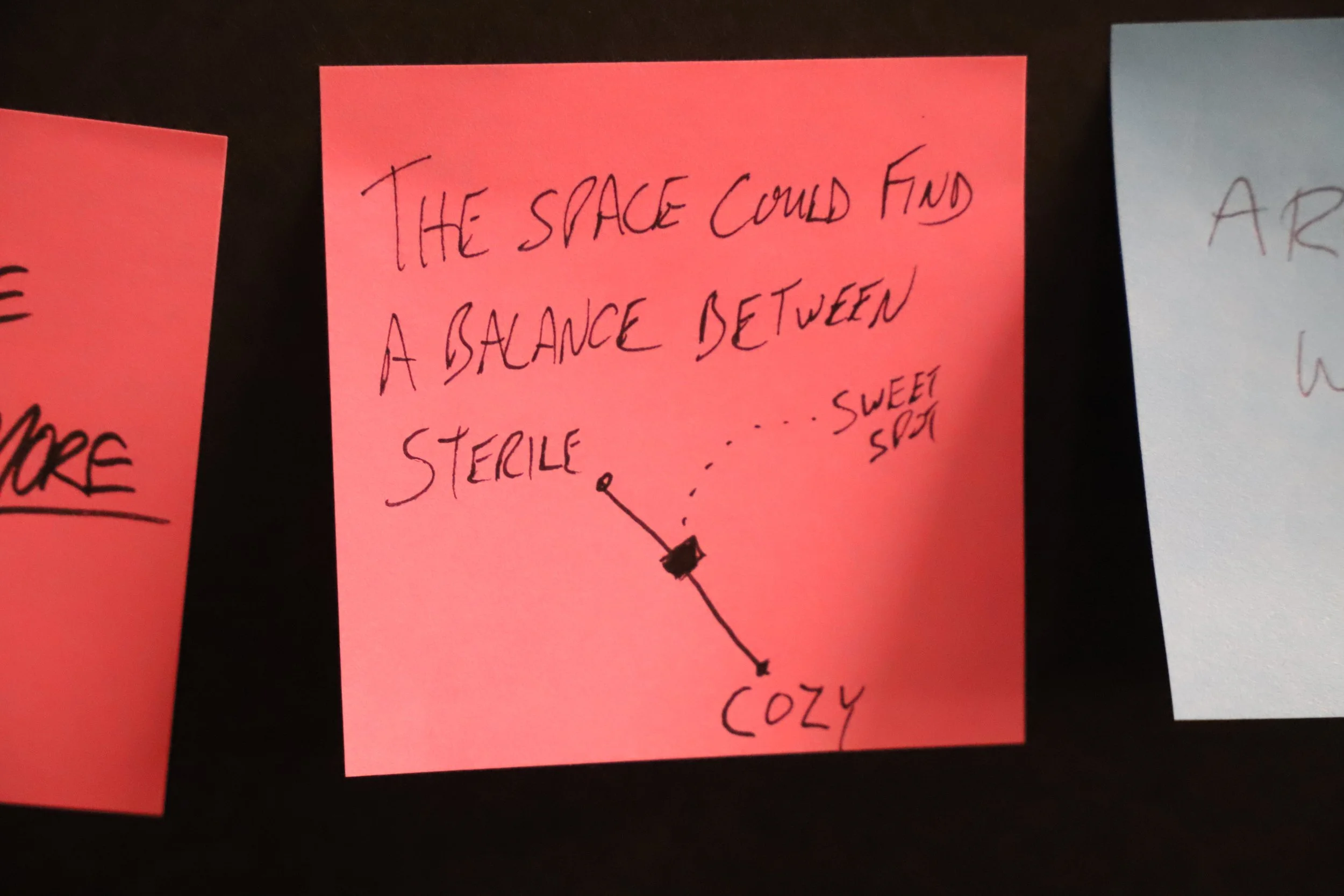
What does the place (and spaces) say to visitors and inhabitants?
What affordances do or don’t exist?
Where do people go now to do typical things like go to class, study, meet with classmates, hang out, prepare for class, and transition to the next activity?
What is the flow of the building like?
How is the place maintained?
Access and Linkages
How does one get to AHG?
What are the entry experiences like?
What spaces and rooms are available for use? How does one know?
Are rooms, labs, bathrooms, and other resources findable, accessible, and usable?
What continuity does or doesn’t exist between AHG and ART? Why?
Sociability
Who is using AHG? How do the communities change throughout the day and night?
Does the space afford individual and group work? Why or why not?
What is the atmosphere like?


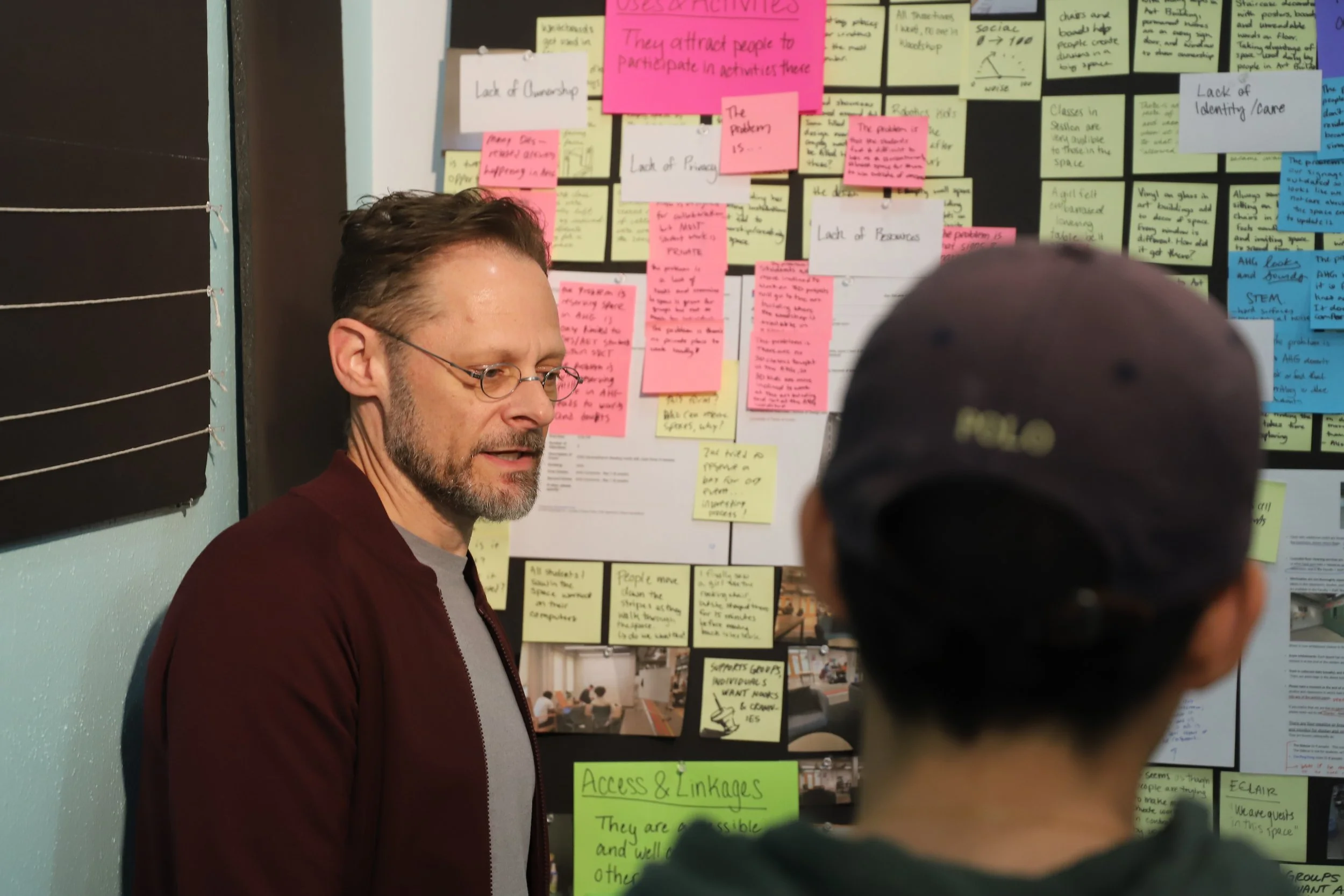
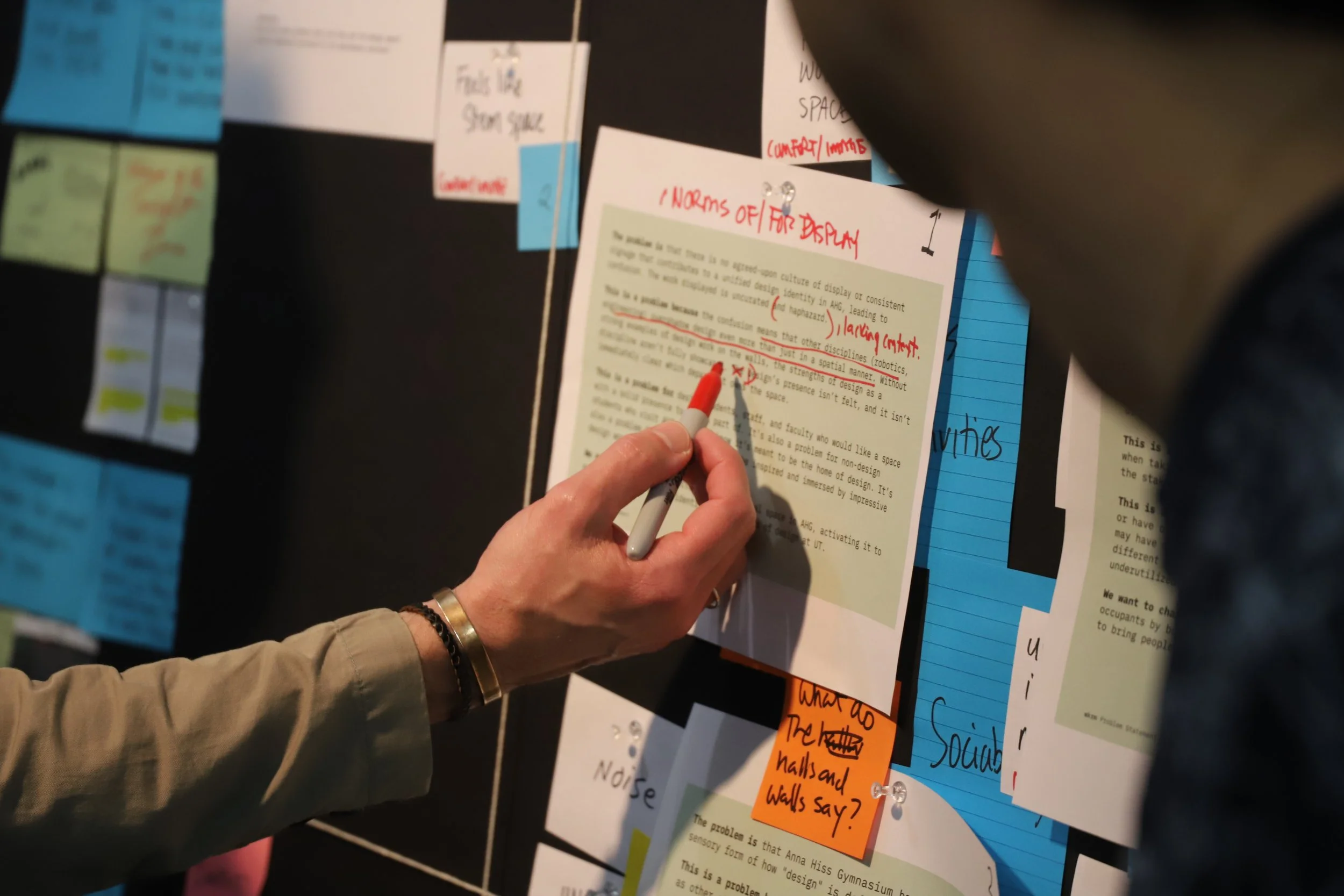
During the Sensemaking process, the student team identified approximately 30 problems to address, prioritized them based on impact and feasibility, and framed 3 that informed concept development and prototyping:
-
The problem is AHG feels transitory and unsettled. Design students (and faculty) don’t seem comfortable enough to settle down and call it home.
This is a problem because without an established presence, meaningful exchange within the community is less likely to happen outside of class time.
This is a problem for design students, faculty, and staff who want a shared place around which to build community and share its benefits.
We hope to change the dynamic of the building and support its intended occupants by transforming AHG into a space for the Design school that is more welcoming, comfortable, and interactive.
-
The problem is that there is no consistent, curated culture of display or signage that contributes to a unified Design identity in AHG.
This is a problem because without coherent examples of design work on the walls, the strengths and potential of the Design department aren’t fully showcased, and students miss out on inspirational moments that help them see relationships between disciplines and find mentors in the school.
This is a problem for design students, staff, and faculty who want to draw inspiration from each other and the work. It’s also a problem for visitors who don’t know much about Design or that AHG is our home.
We want to activate a more narrated vertical space in AHG to drive Design storytelling, dialogue, and engagement at UT.
-
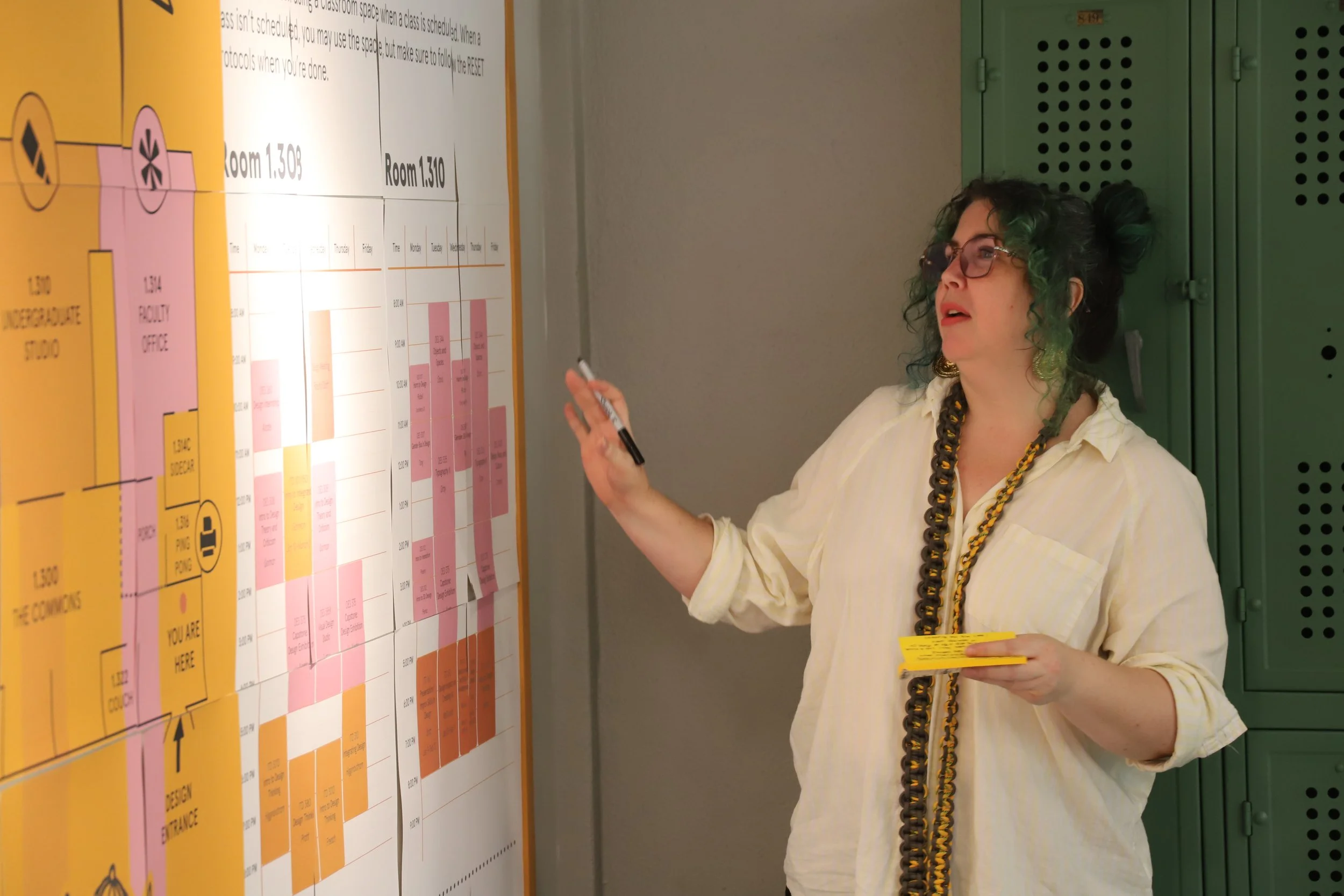
The problem is that students struggle with invisible barriers that arise when accessing and using Anna Hiss Gym. Students are intimidated by the woodshop and digital fabrication lab and confused about how to access them. Furthermore, they lack the knowledge of when classrooms are in use, so they are more reluctant to use the available studio supplies in each classroom.
This is a problem because students’ reluctance to use the resources at the AHG means that tools and technologies that are important for building design skills sit unused while labs are dark and empty. Students see the Anna Hiss Gym as a place where classes are held and not a place where they feel comfortable creating.
This is a problem for design students, especially those affected by COVID, who do not understand everything available and possible in the space that should feel like their home away from home.
We want to change this by clearing away the barriers and making the space resources clear to students, staff, and faculty.
Ideation and Prioritization
-
![]()
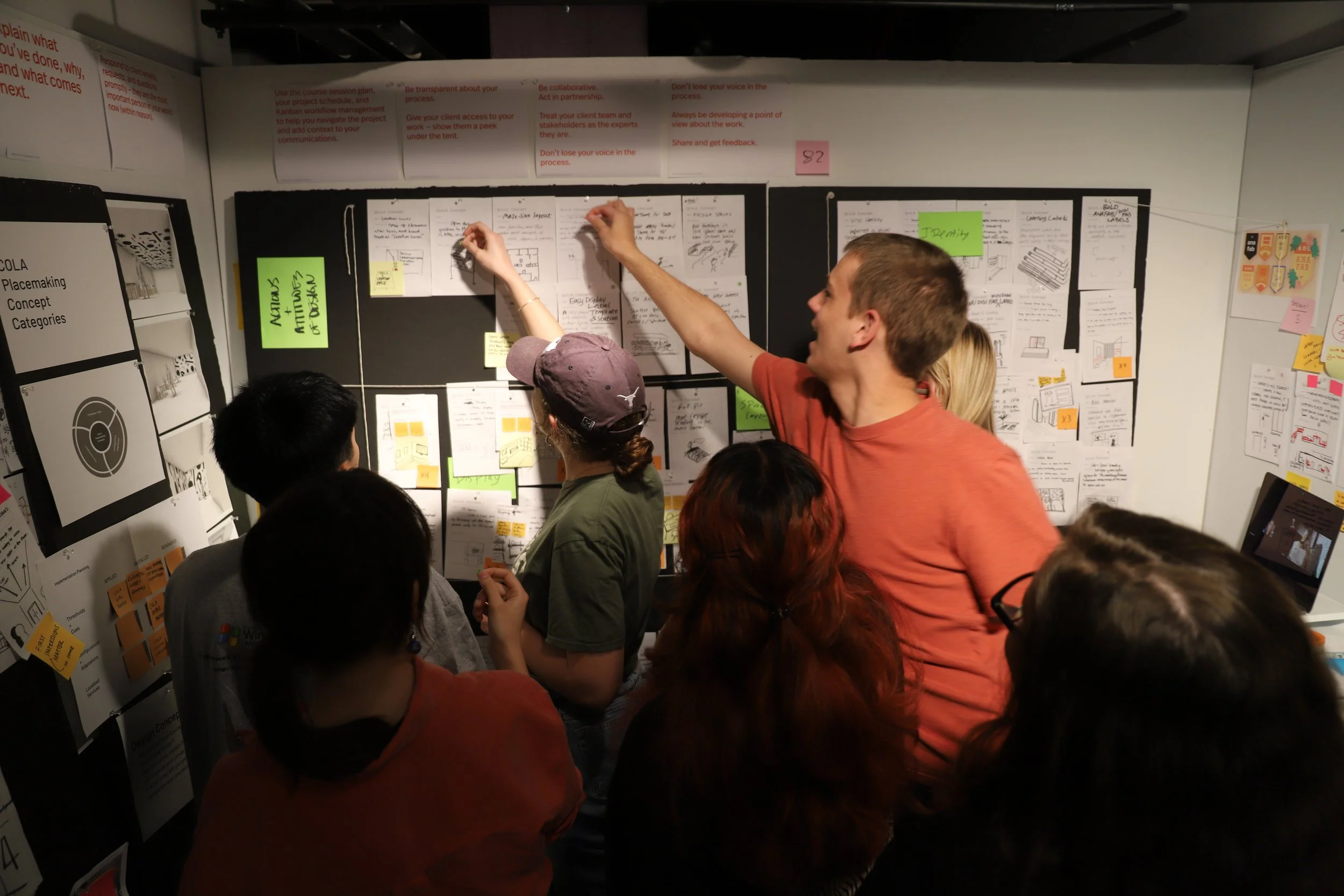
Teams chose problem areas and developed approximately 100 “Quick Concepts” that informed spatial and behavioral prototypes.

Prototype Planning and Testing
-
![]()
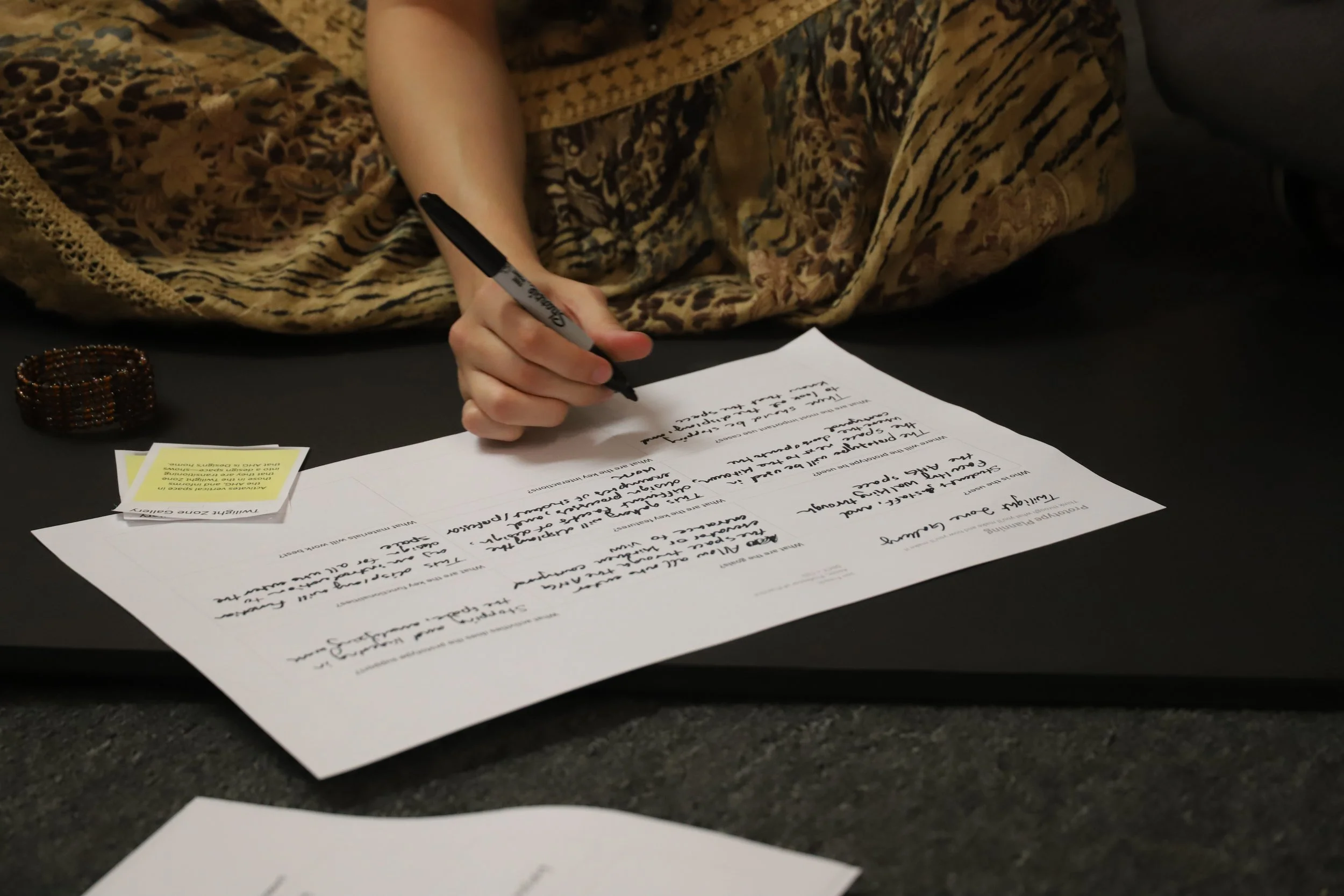
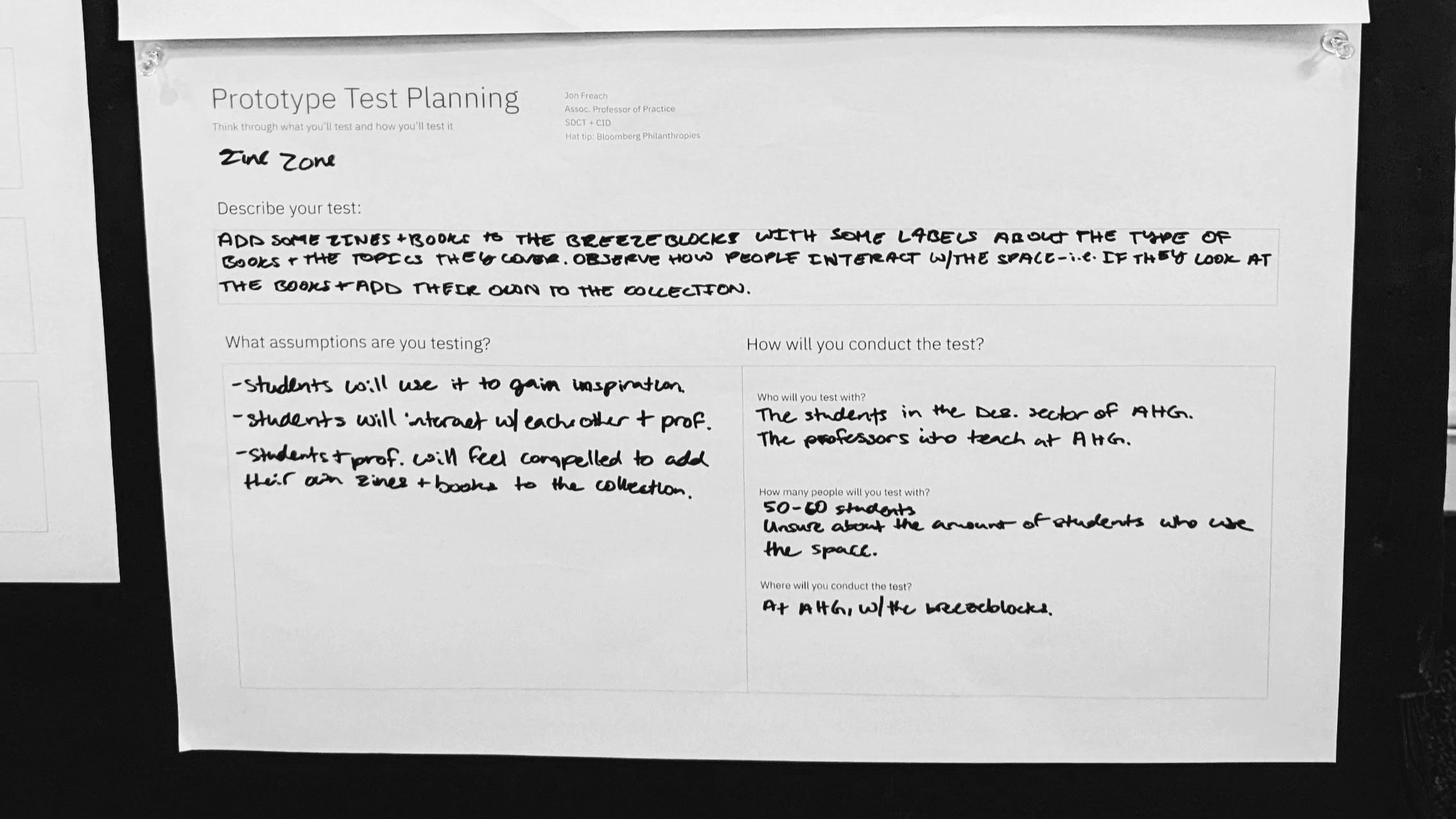
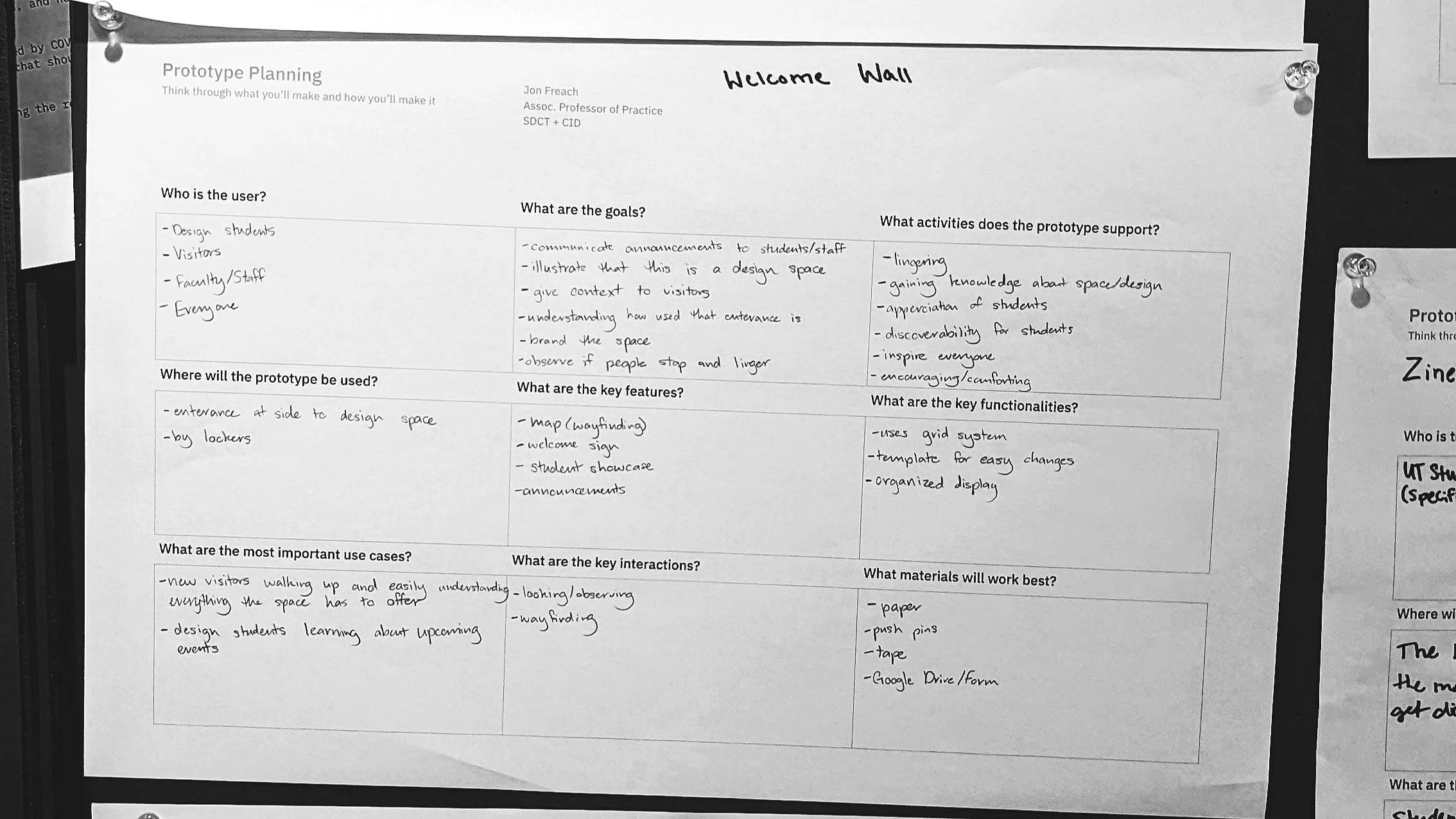
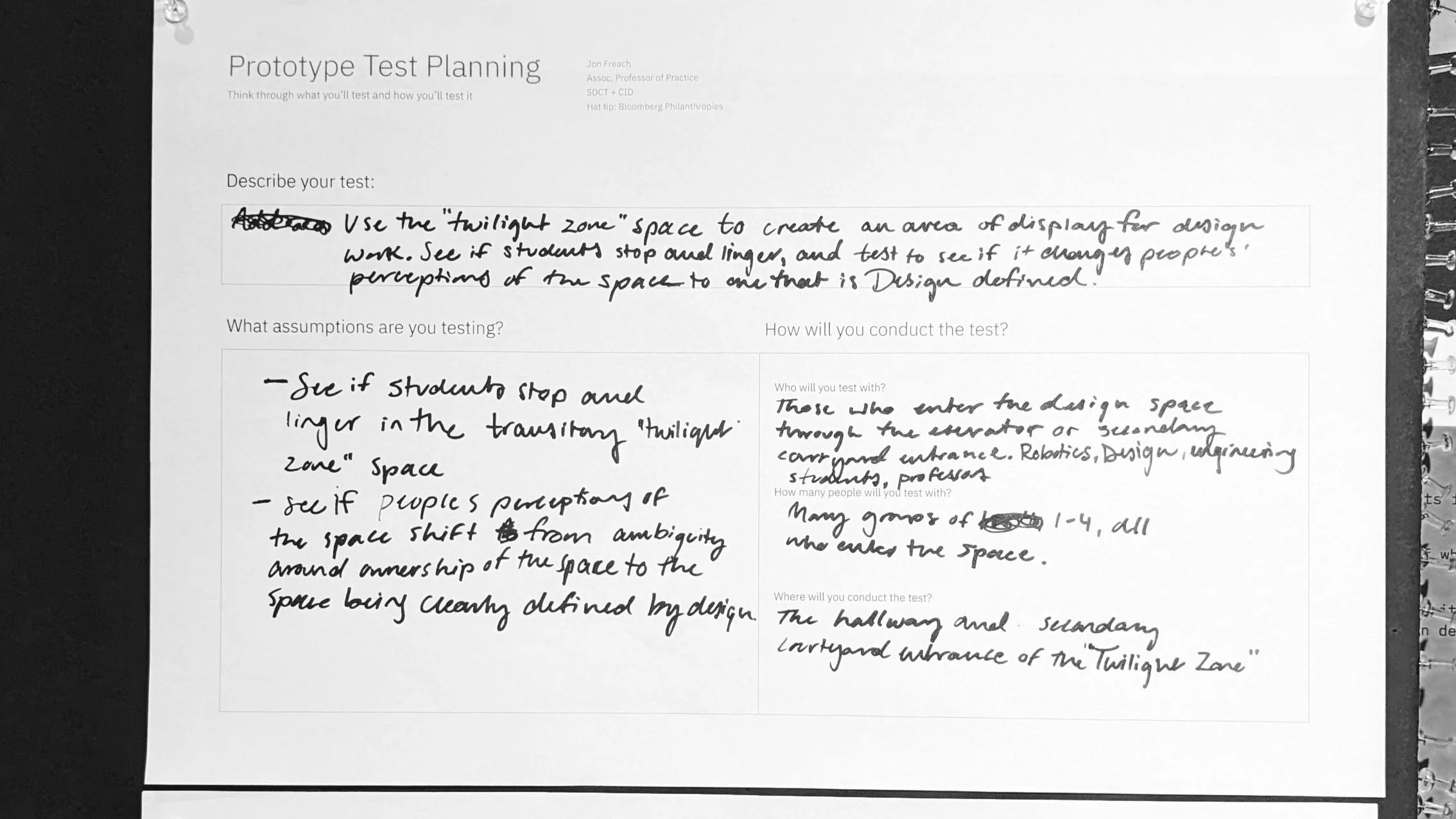
After choosing the best concepts that addressed different problems, student teams planned prototypes and tests to gather feedback.
-
![]()
Planning helped them quickly think through the behaviors, features, and materials for each prototype.
-
![]()
-
![]()
-
![]()
-
![]()



Prototypes that introduce and orient visitors to the school
-
![]()
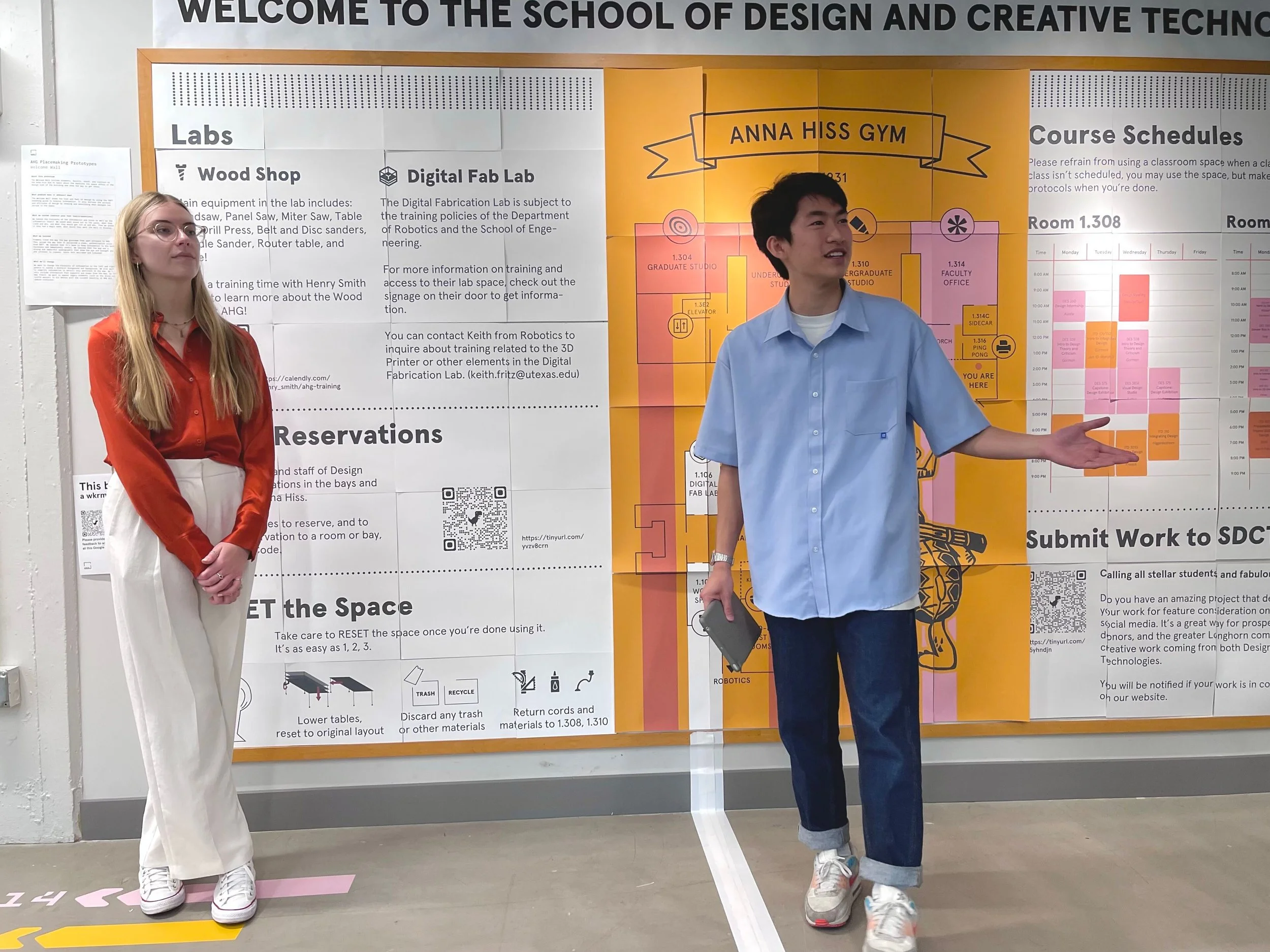
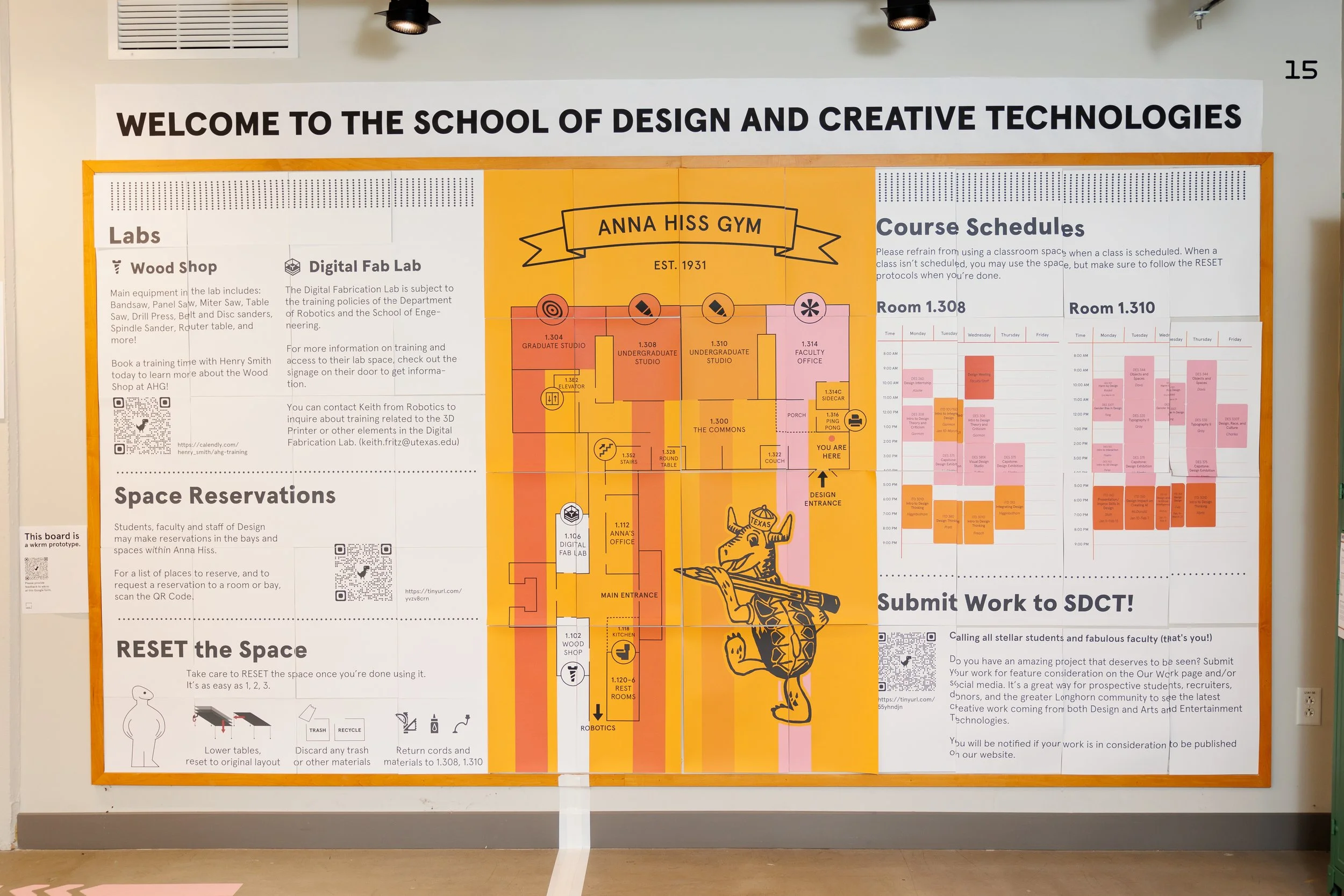
A welcome wall expresses the identity of the school and gives visitors the lay of the land.
-
![]()
Testing revealed that students, faculty, and visitors appreciated the expression of identity and map, but thought there was too much detail and not enough hierarchy.
-
![]()
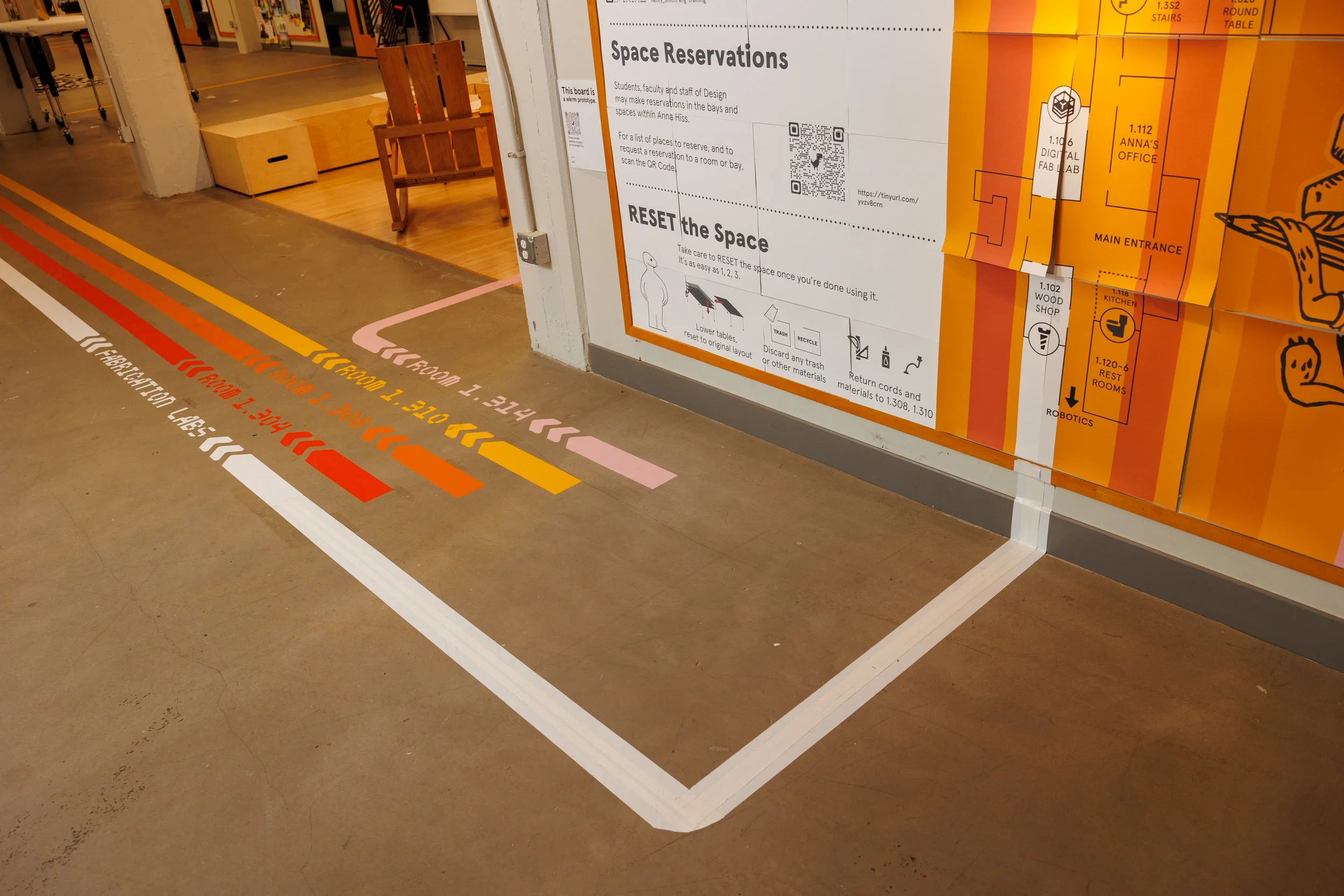
The map is connected to existing wayfinding devices like directional floor lines.
-
![]()
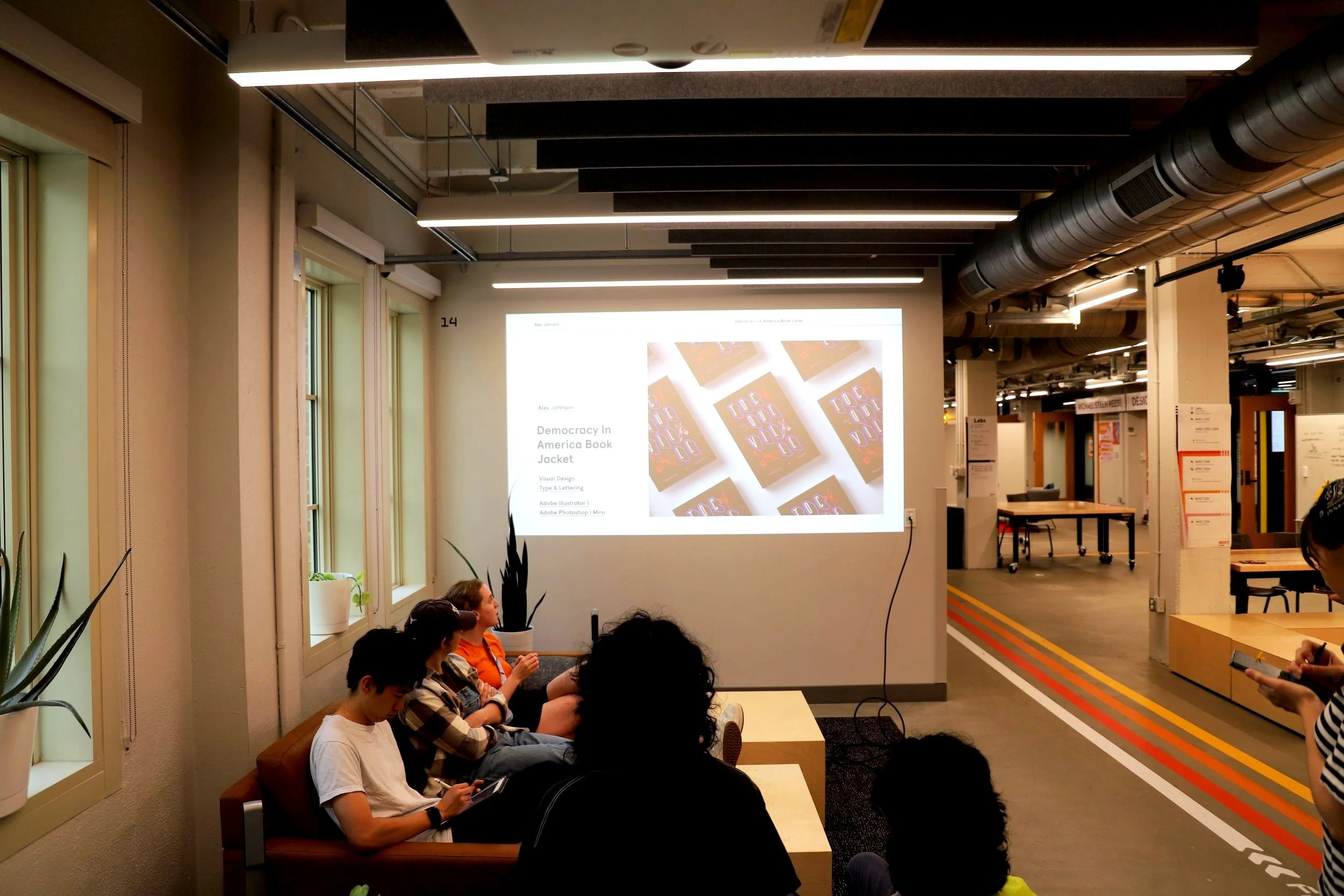
A projected portfolio of student work is on display adjacent to the welcome wall.
-
![]()
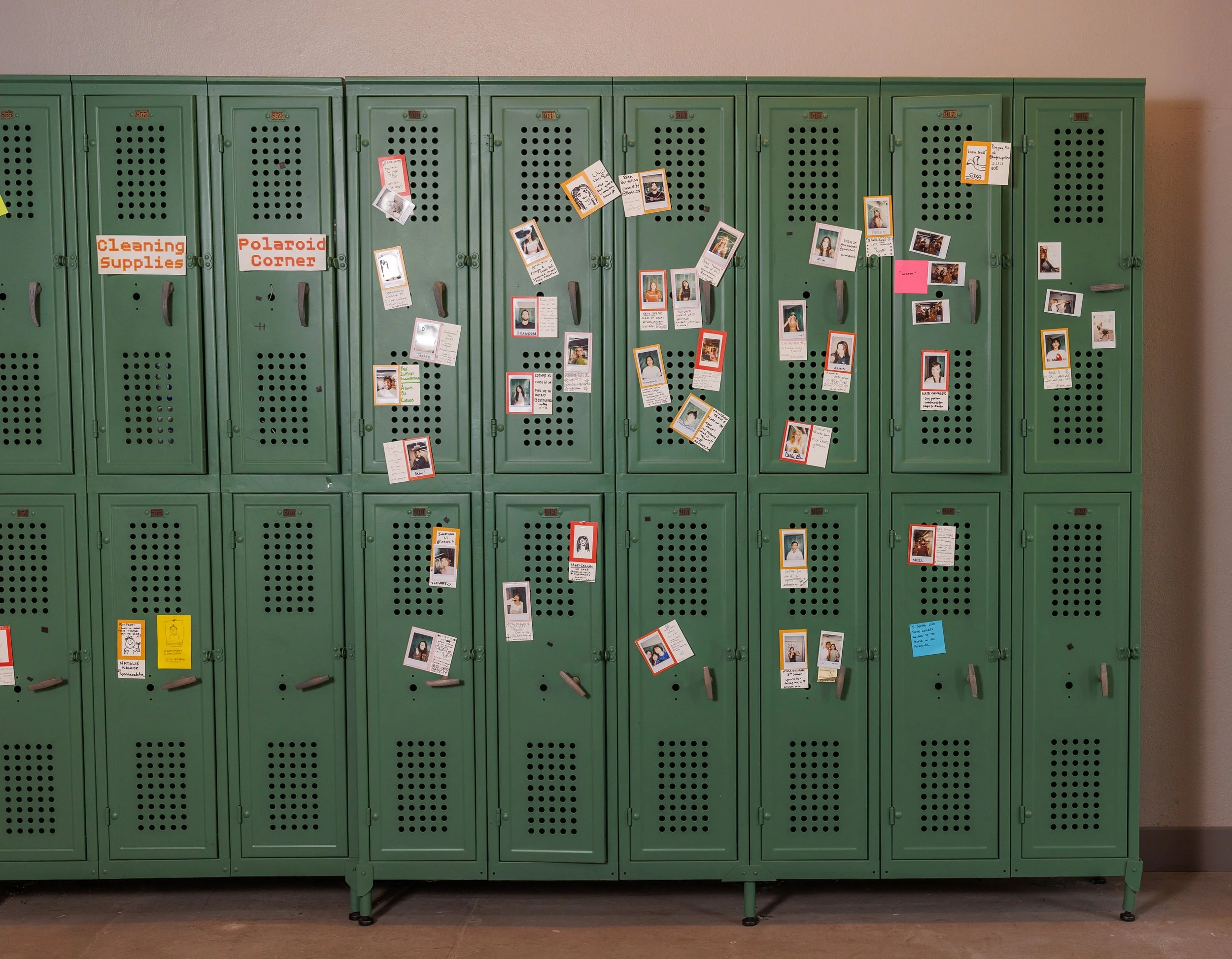
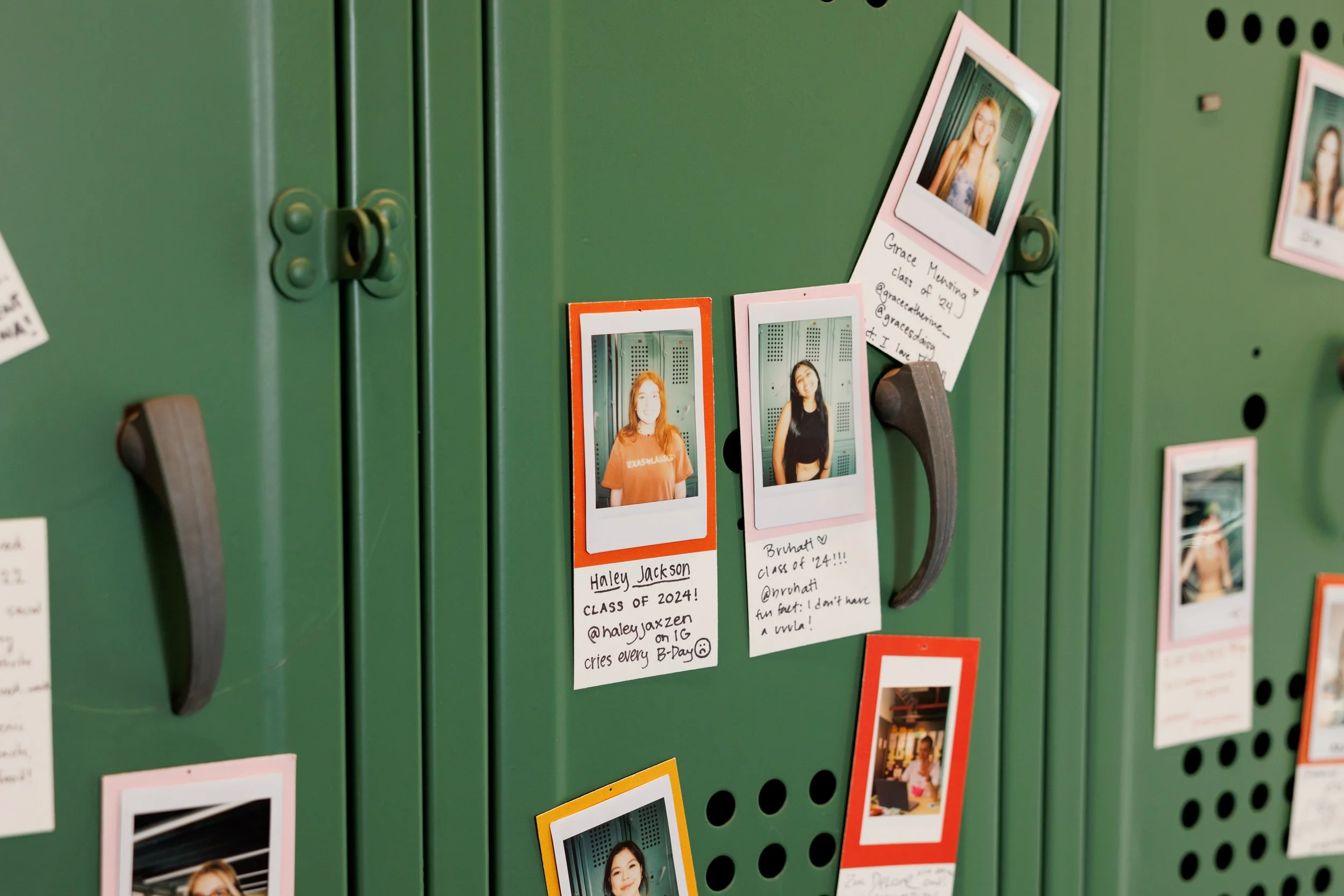
Original lockers from the old Anna Hiss Women’s gymnasium display Polaroid selfies of students and faculty while containing materials and other student items.
-
![]()

Prototypes that signal and cue behaviors
-
![]()
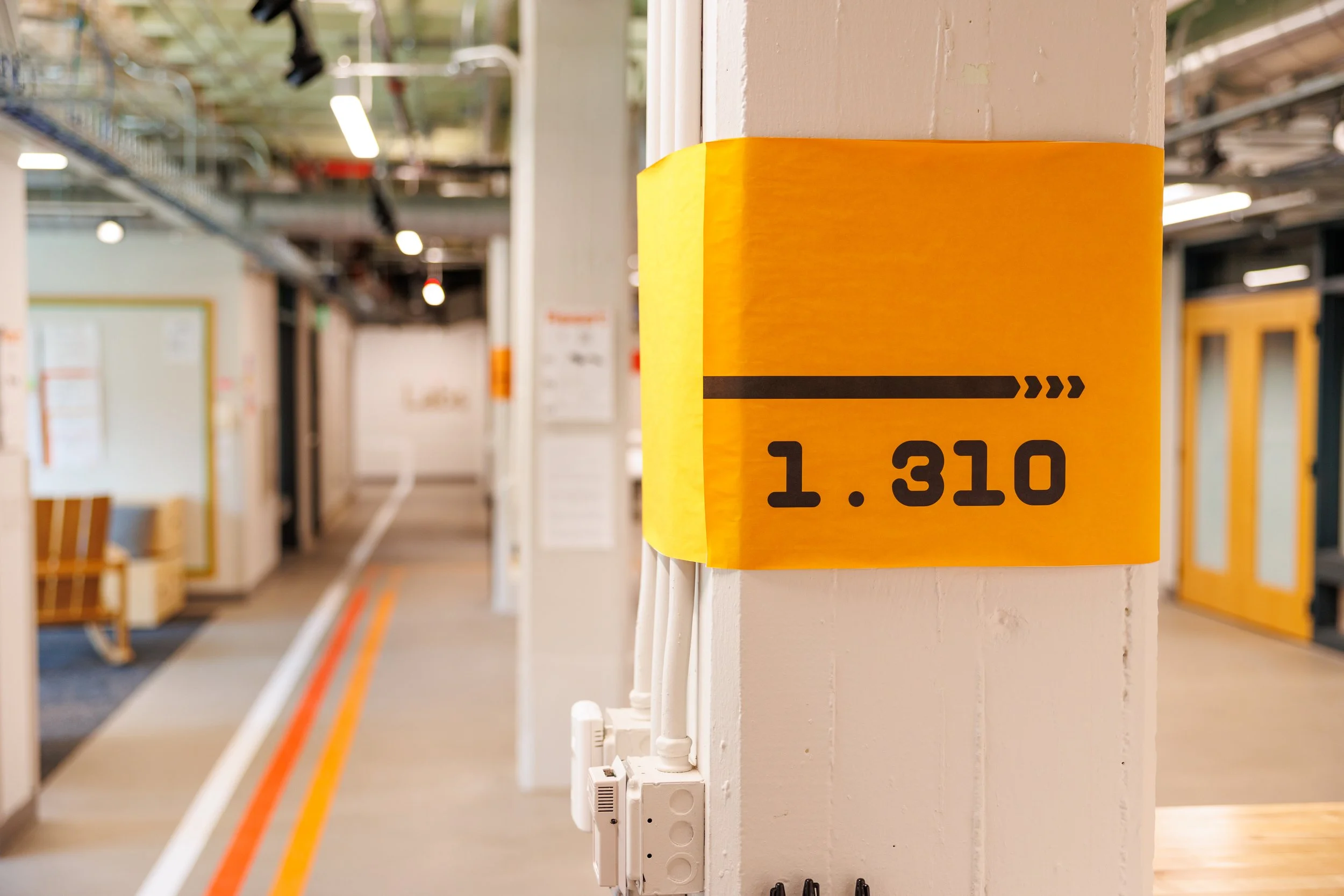
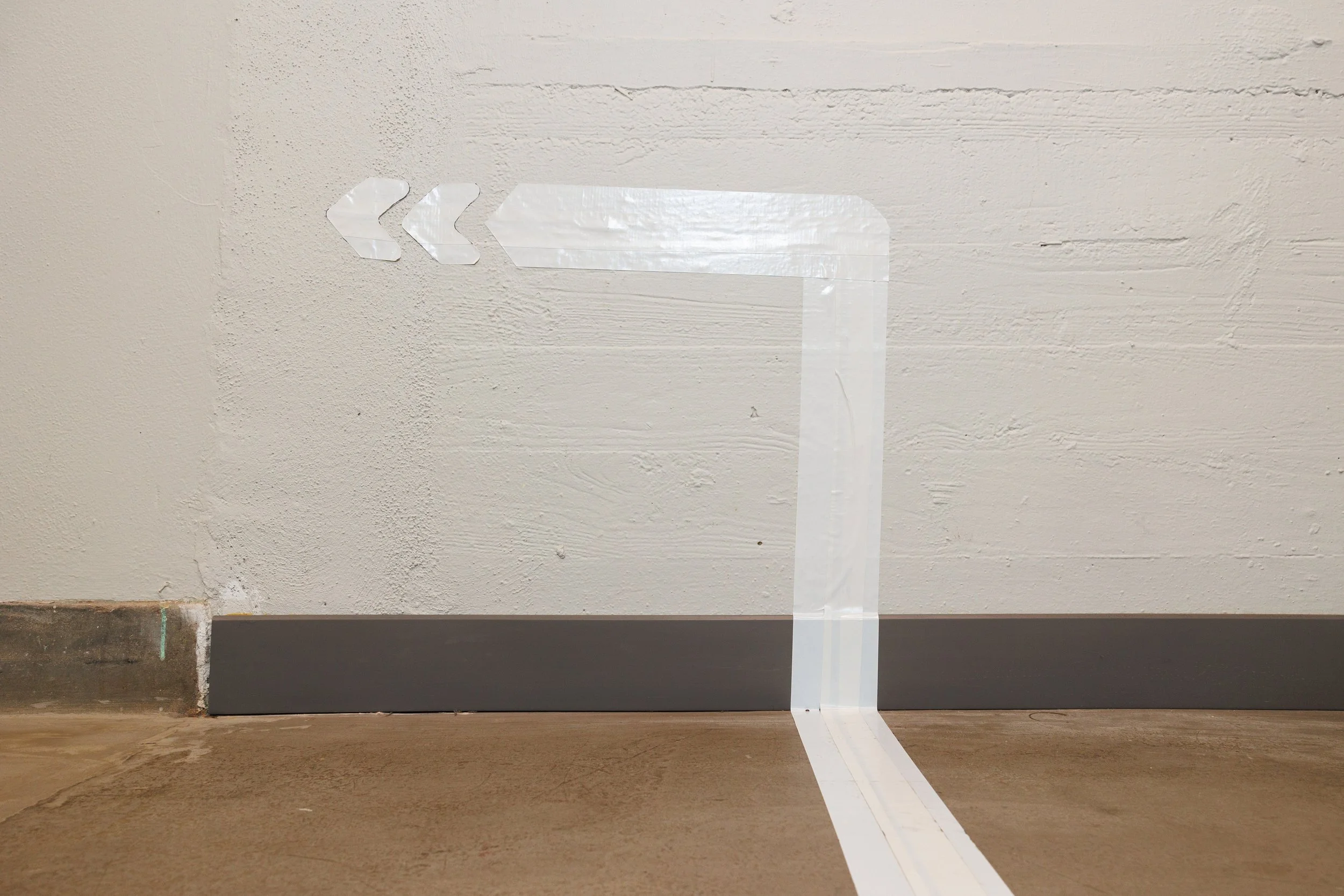
Vertical color bands and typography relate to graphic floor elements to signal room locations without over-signing the environment.
-
![]()
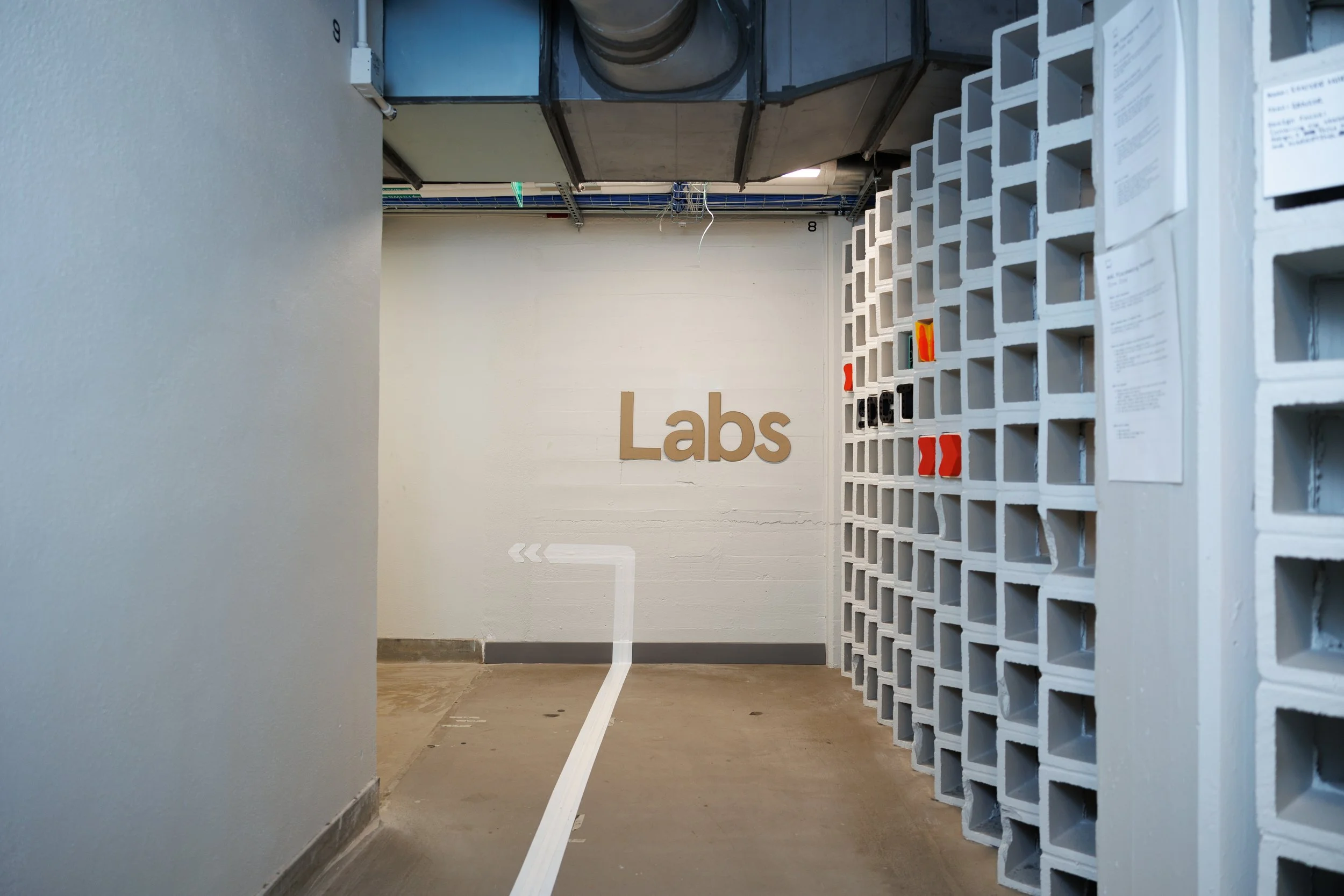
Research showed that new students didn’t know where the design labs were located. The large lettering and supergraphics signal direction in a vague corner.
-
![]()
A concrete block archery wall screen is another historical feature of the original gymnasium and offers a fun way to identify the School of Design and Creative Technologies (SDCT) while directing visitors back to the classrooms and studios.
-
![]()
-
![]()
3-D printed modular lettering prototypes fit into each cubby on the wall.
-
![]()
-
![]()
Painter’s tape enabled experimentation with the size and location of the stripe and arrow (a prelude to vinyl graphics).
-
![]()
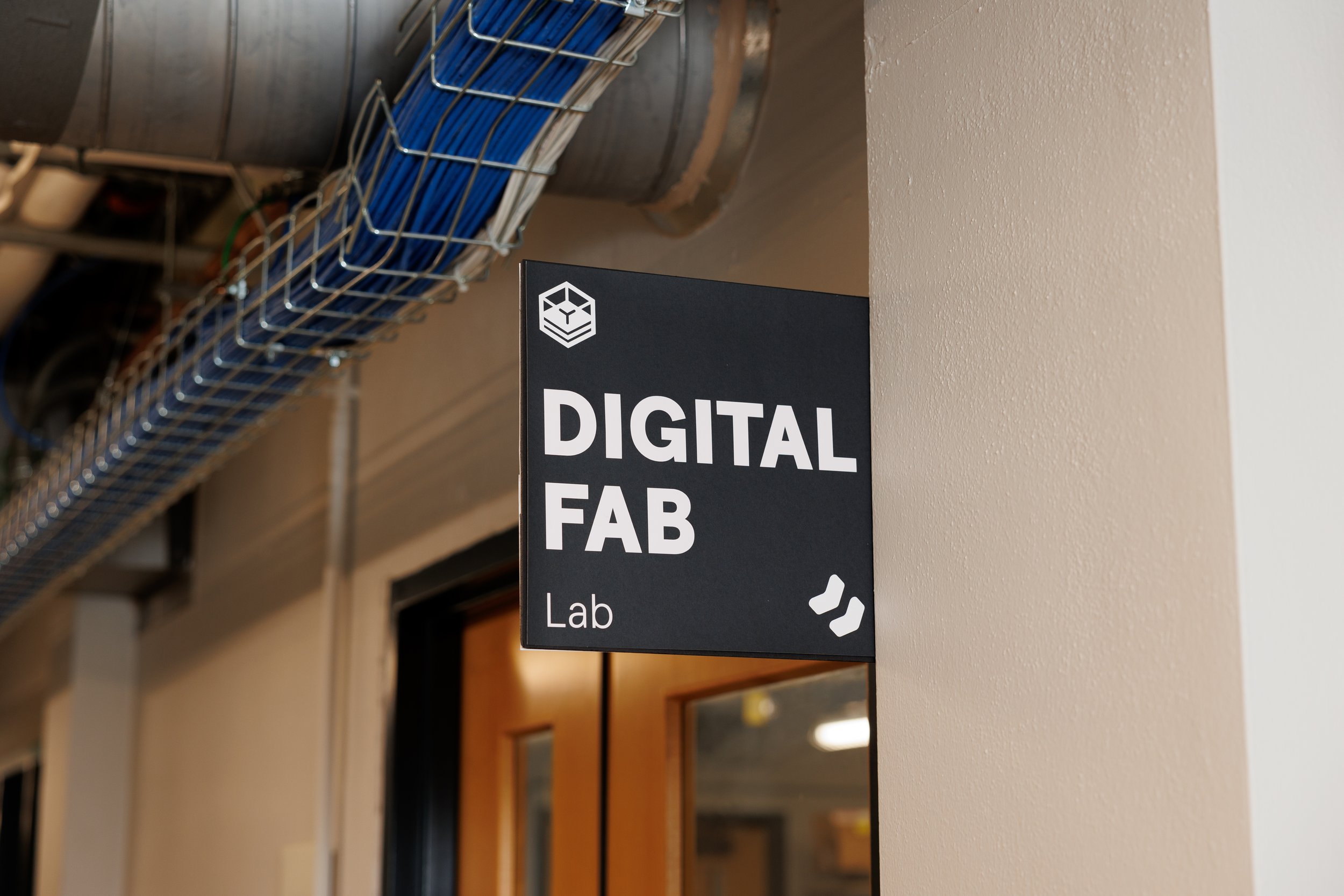
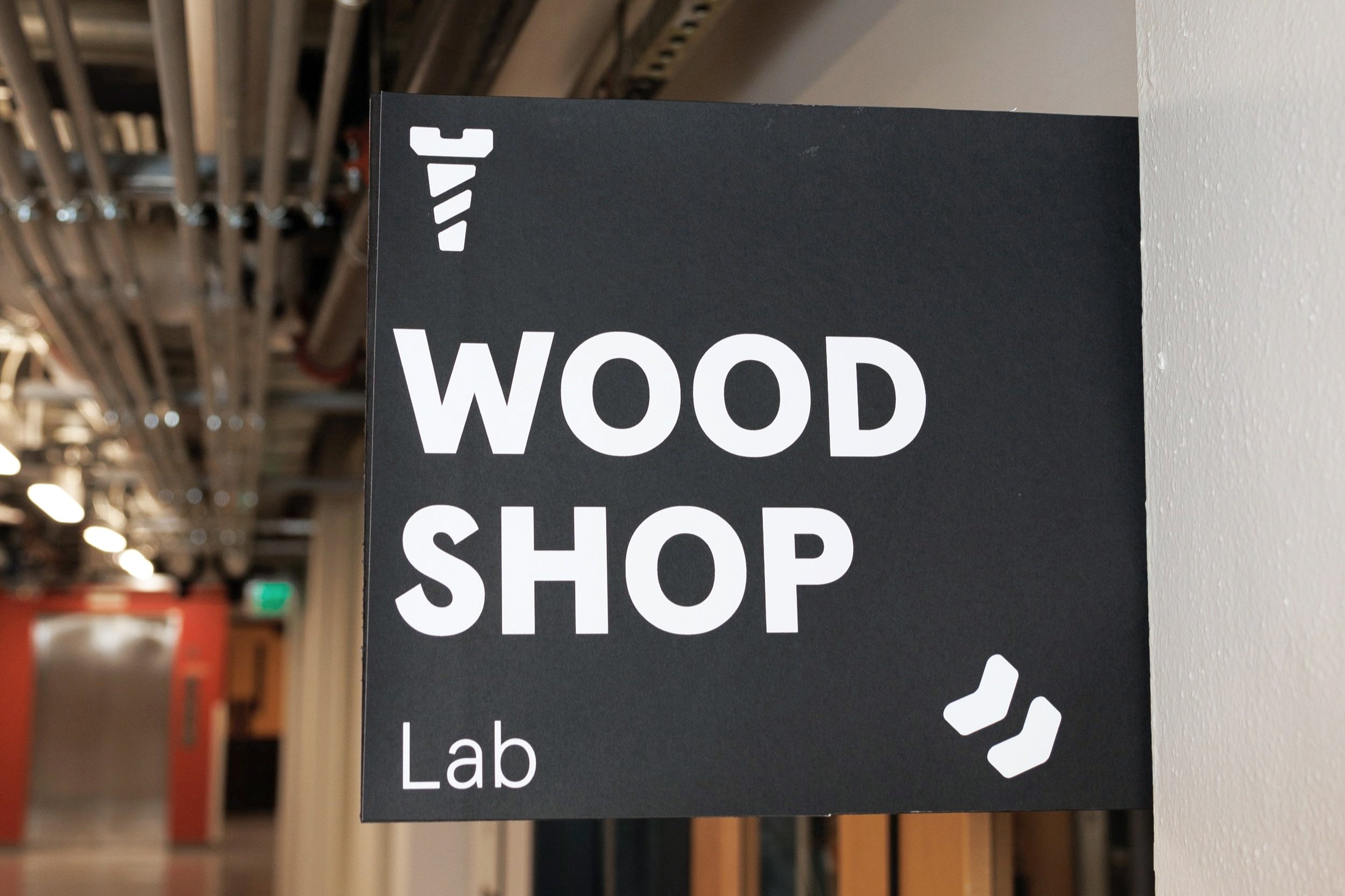
New perpendicular blade signs enable visitors to see where the labs are located as they walk down a long, narrow hallway.
-
![]()
-
![]()
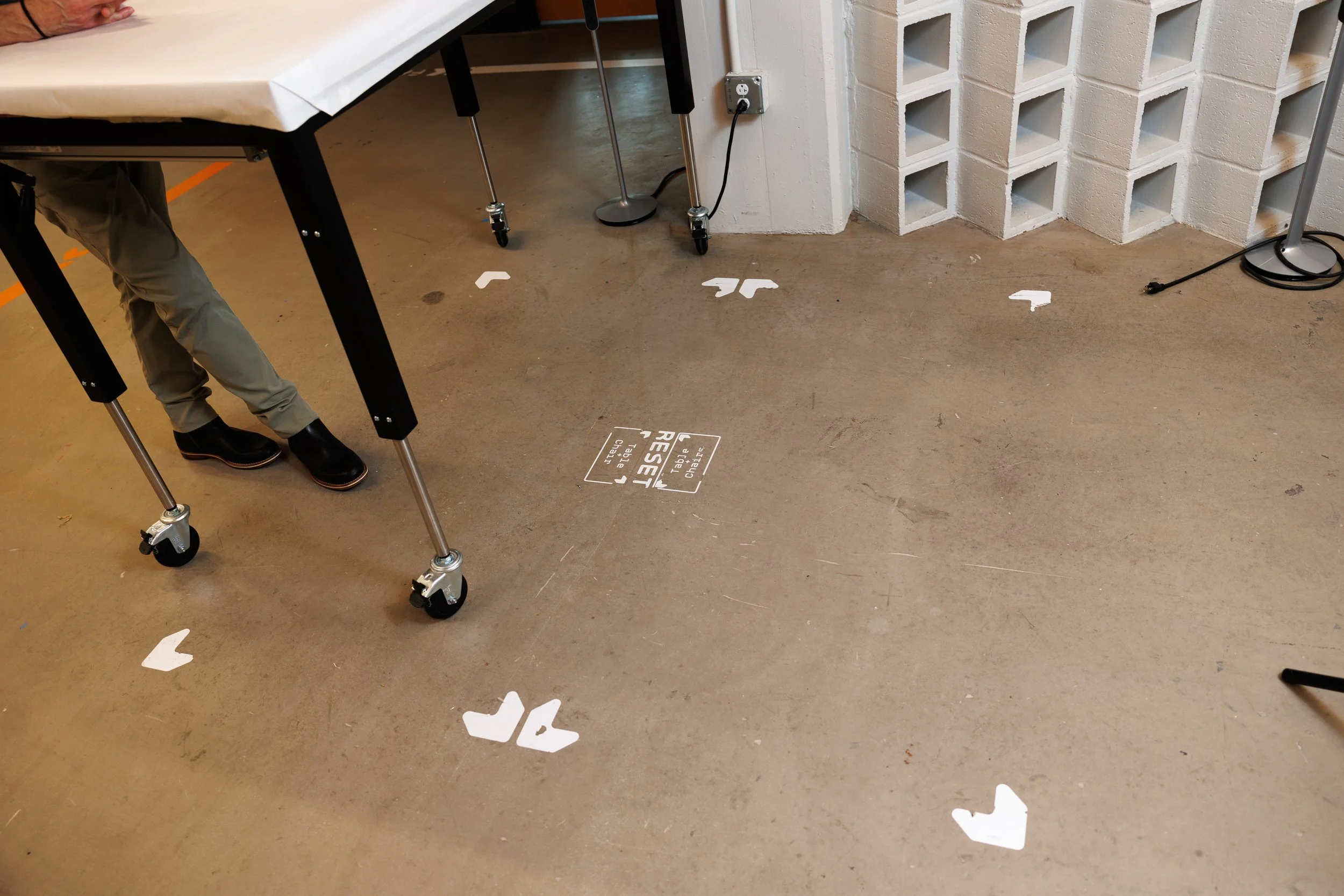
Space management messaging made by a previous class is reinforced in the new placemaking program.
-
![]()
Floor graphics help students and faculty reset the space and maintain orderliness.
-
![]()
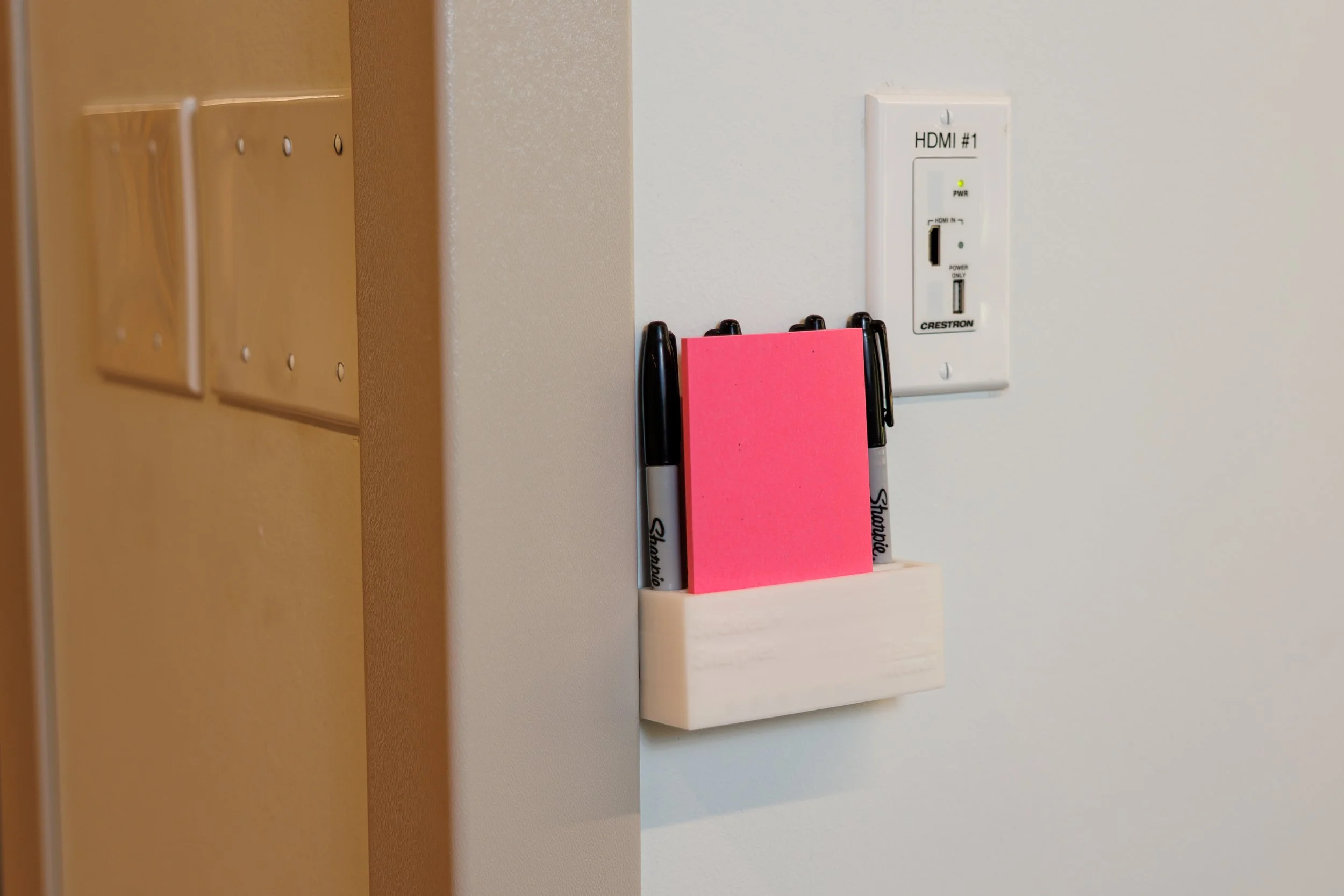
3-D printed dispensers provide useful affordances that support externalizing work and prompting discussions during the design process.
-
![]()




Prototypes that establish and support cultural norms
-
![]()
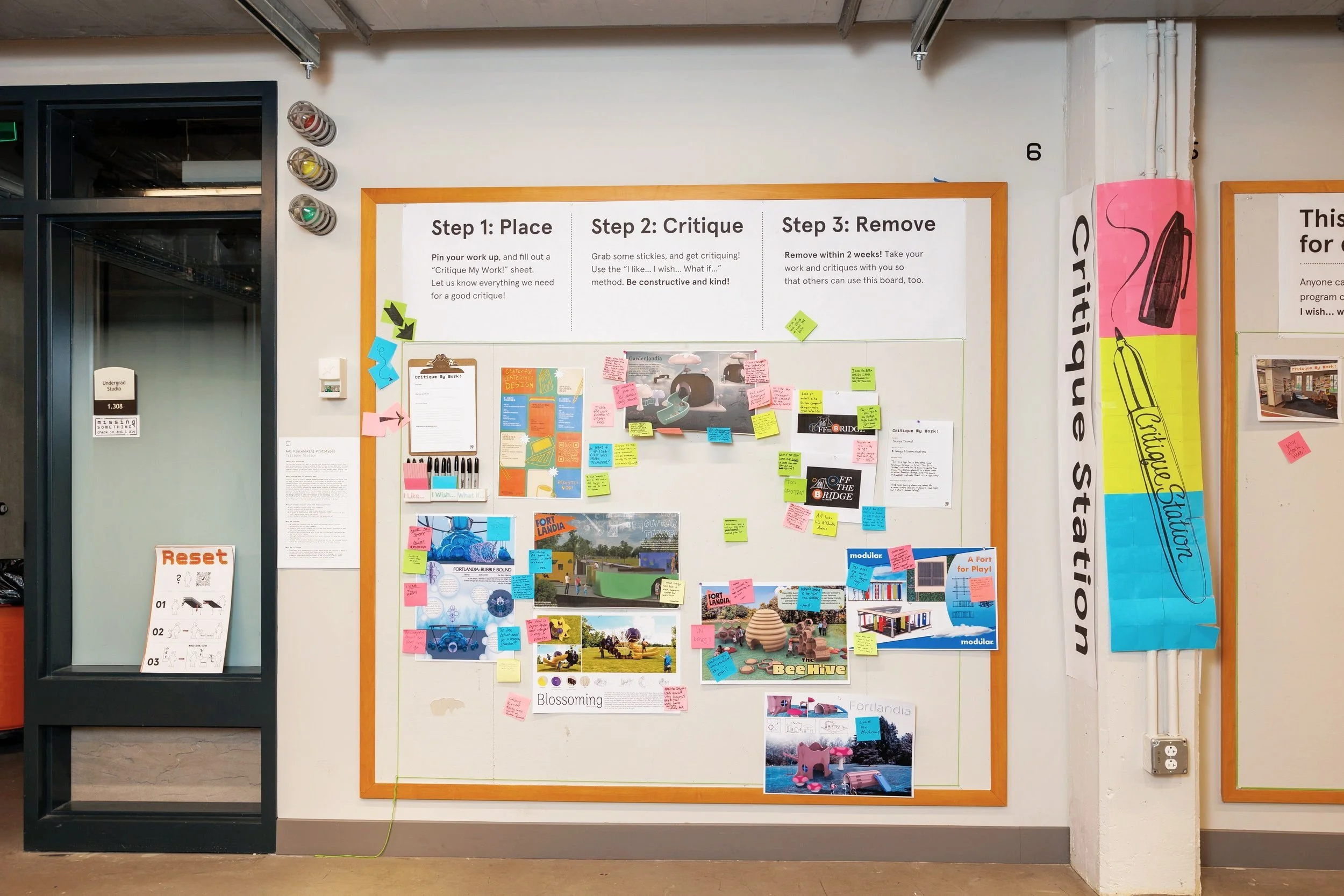
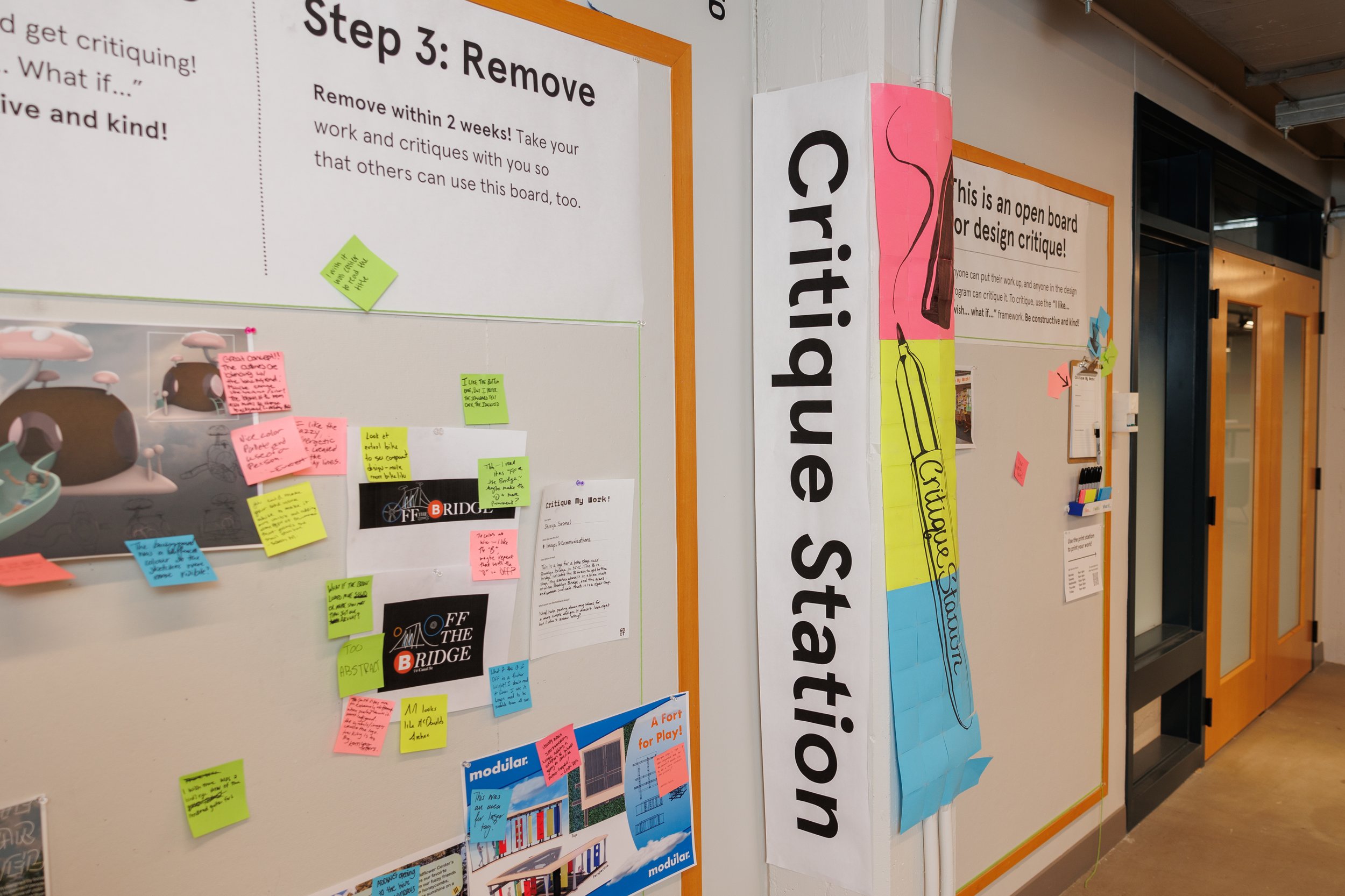
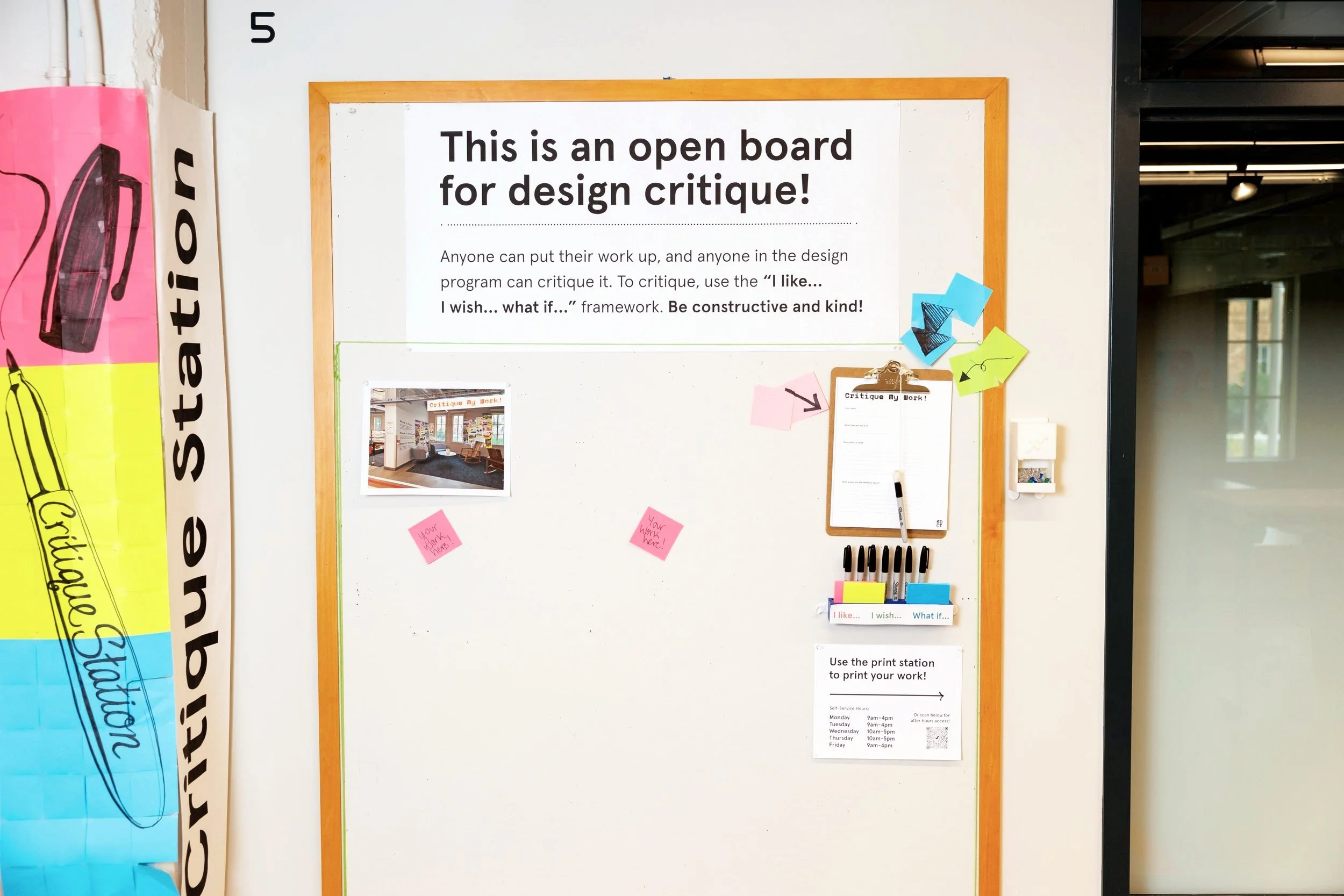
Critique, essential in design, is celebrated and supported through Critique Stations in the main hallways and bays of the building.
-
![]()
Titling reinforces shared approaches to facilitating critique between different courses, professors, and students.
-
![]()
-
![]()
-
![]()
-
![]()
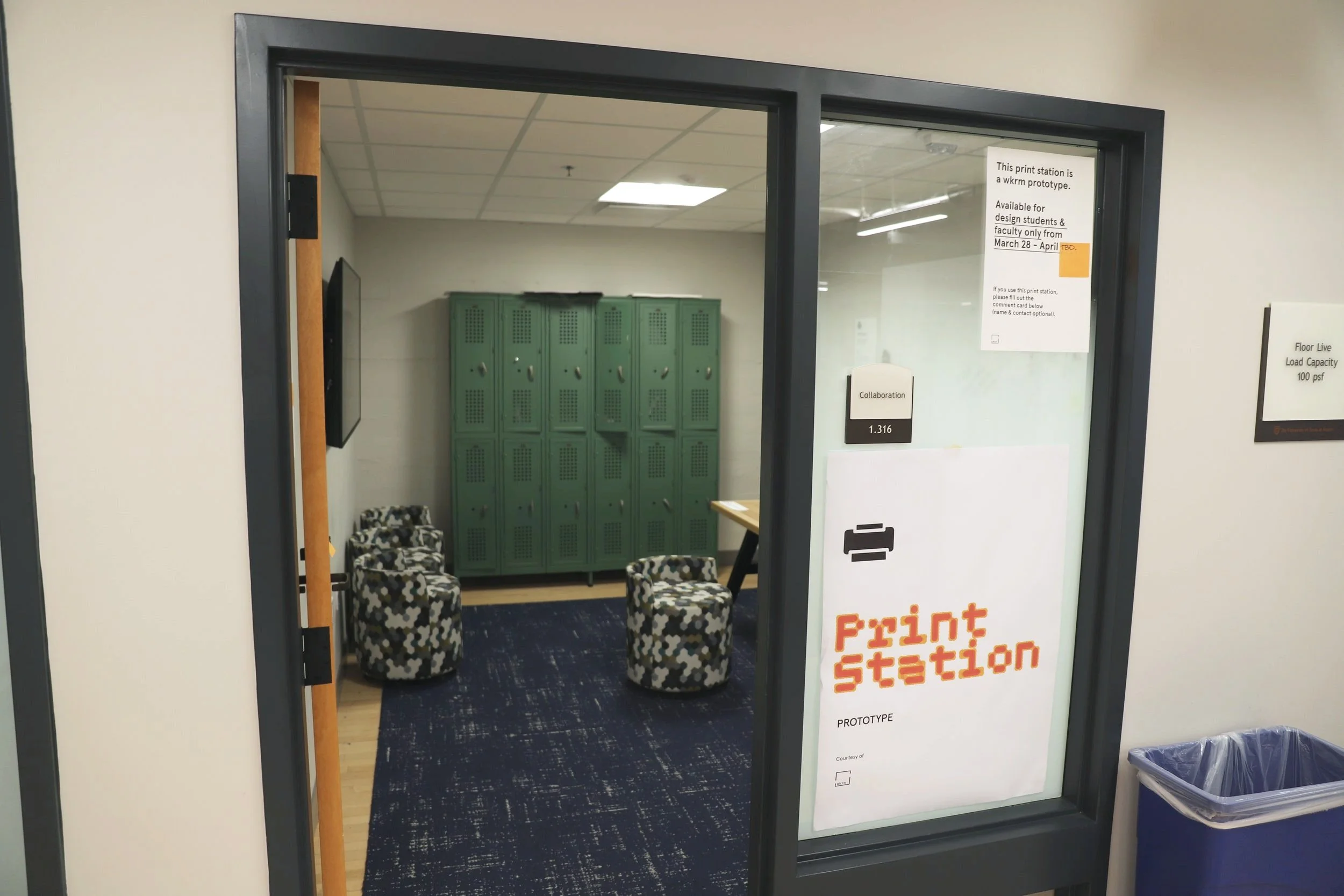
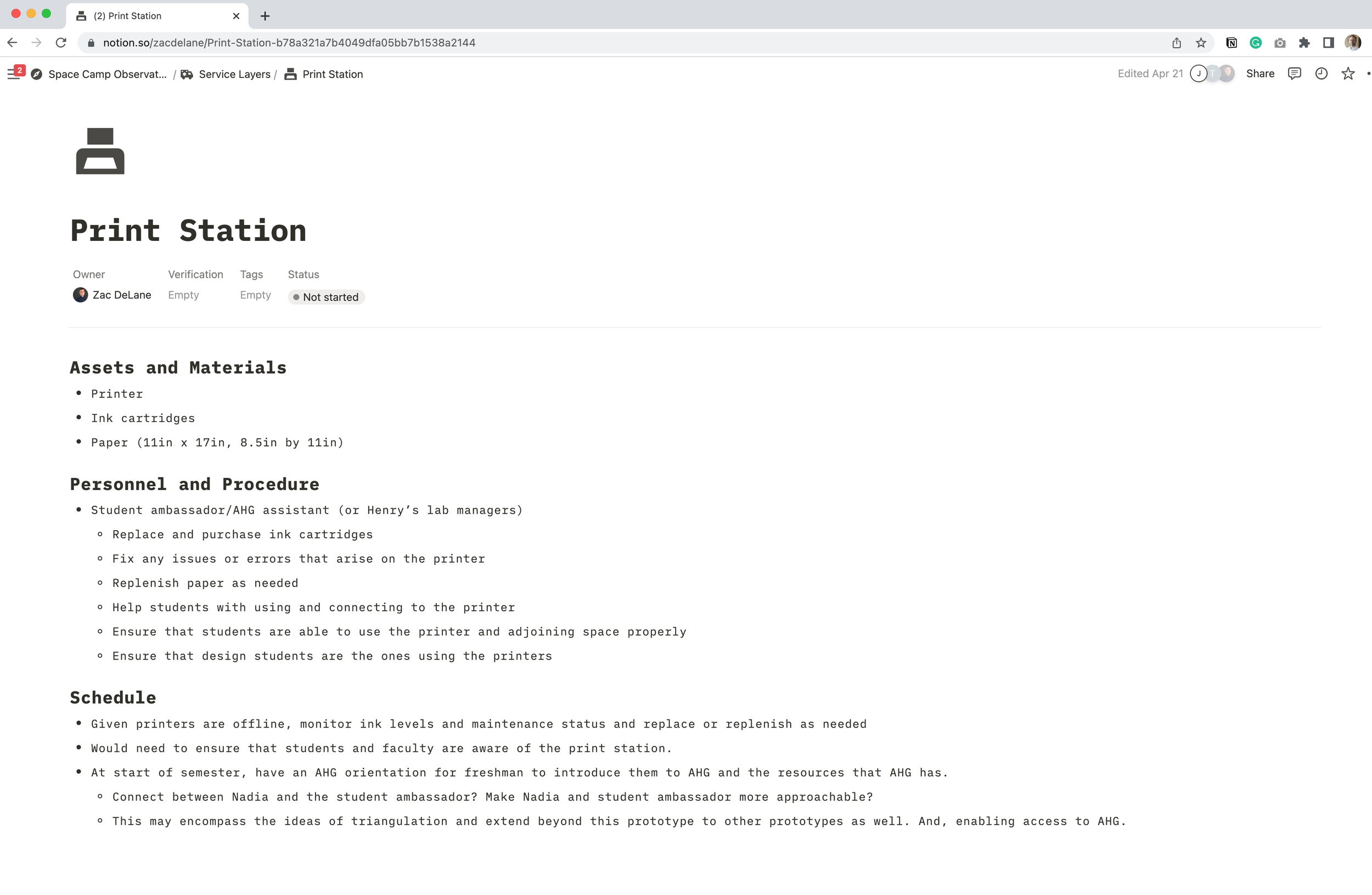
A free printing station was a popular new service during the prototyping phase that challenges departmental and institutional policies (a sign of a successful prototype!)
-
![]()
-
![]()
Humble in scale, the Printing Station occupied an underused faculty conference room and supported various paper sizes.
-
![]()
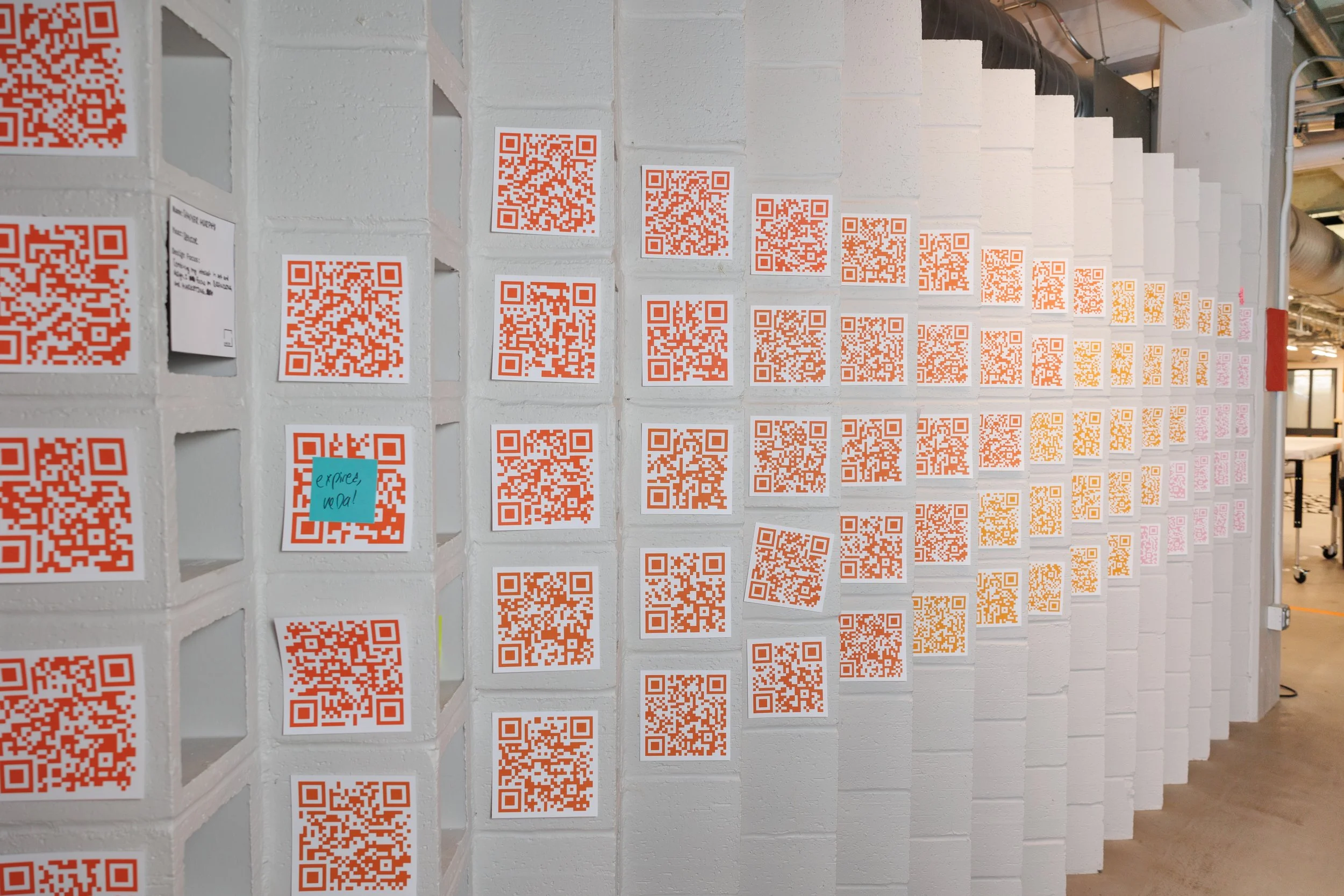
The historical archery screen also supported a prototype that enables visitors to view student portfolios.
-
![]()
-
![]()
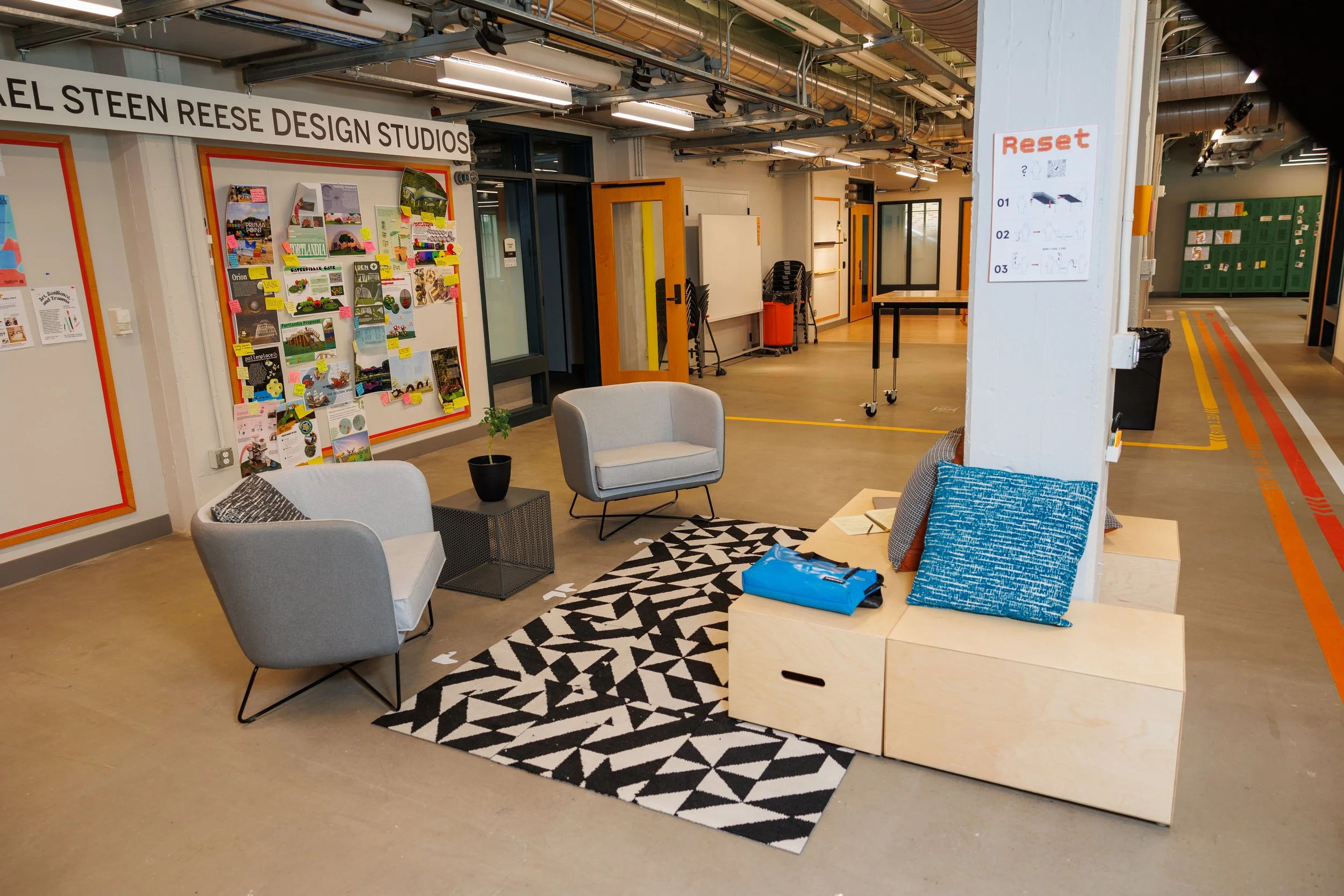
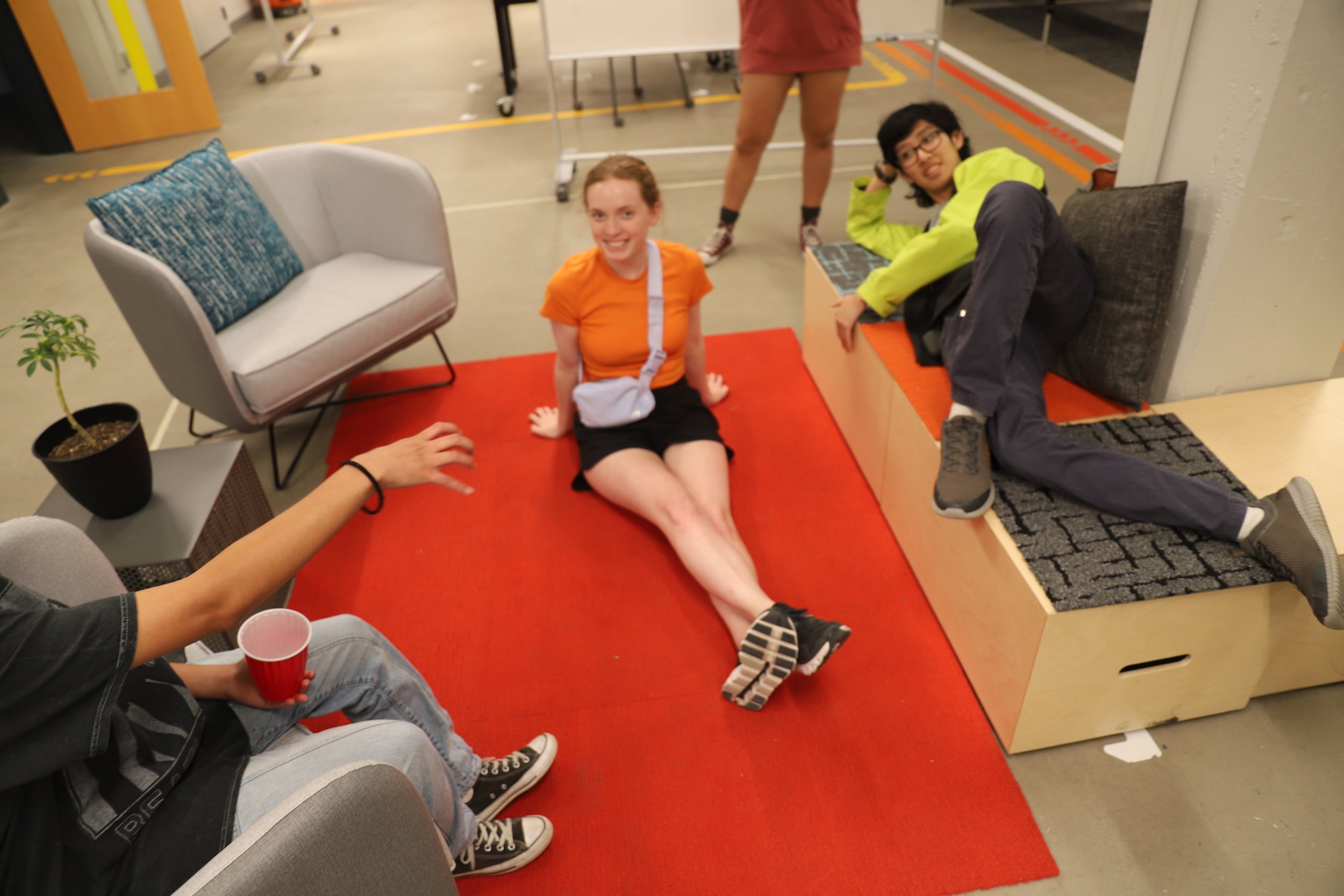
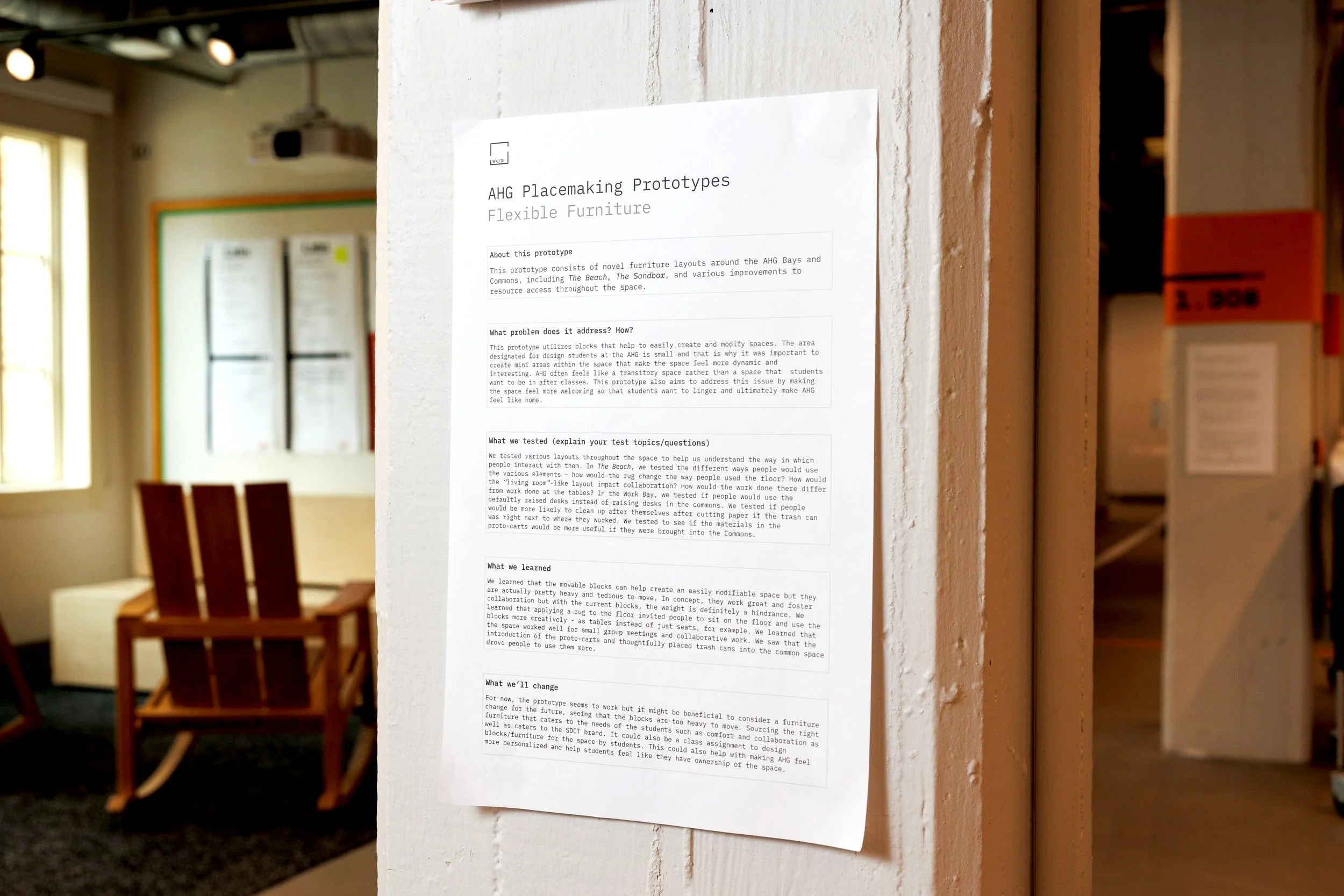
Research showed that students were working in both group, individual, and hybrid modes. “The Beach”, a flexible arrangement of furniture, flooring, and seating, breaks up old, accepted configurations.
-
![]()
-
![]()
Prototyping carts filled with materials that were previously housed inside classrooms found increased use in studio bays.
-
![]()
Each prototype revealed new, important findings that inform future iterations.






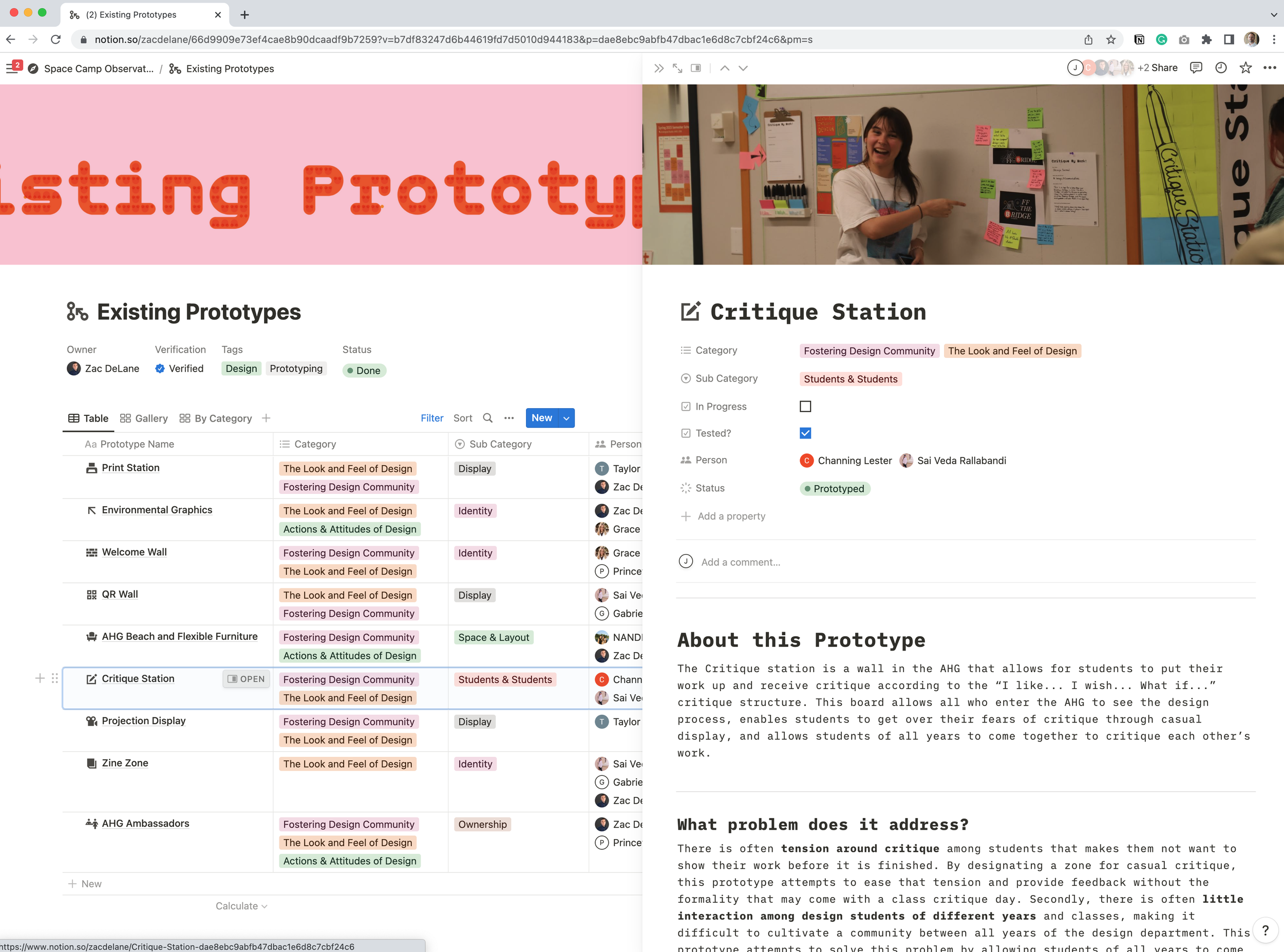
The Space Camp Observatory: A Service Design Tool to Support Placemaking
-
![]()
A “wiki” that catalogs the research and design was developed to support the Design department planning process during future phases.
-
![]()
Each prototype’s rationale and testing findings are easily accessible.
-
![]()
-
![]()
All prototypes require information and instruction about next steps, ownership, and maintenance in order to keep them functional and responsive to future needs.
-
![]()



What work looks like in wkrm
-
![]()
-
![]()
-
![]()
-
![]()
-
![]()
-
![]()
-
![]()
-
![]()
-
![]()
-
![]()
-
![]()
-
![]()
-
![]()
-
![]()
-
![]()
-
![]()
-
![]()
-
![]() Description goes here
Description goes here -
![]()
-
![]()
-
![]()
-
![]()
-
![]()